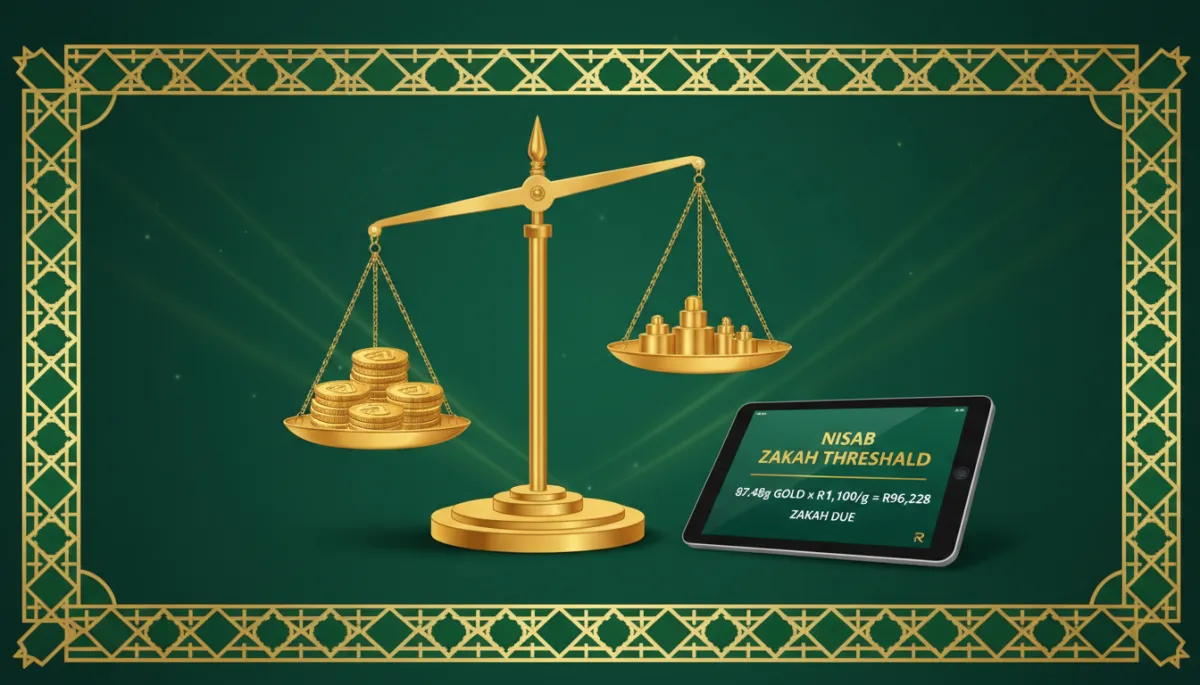
Annual Nisab Valuation Evidence Log South Africa
A Nisab figure can change with the valuation date, metal standard, weight, price source and currency conversion. An evidence log prevents a household or business from copying an unexplained online number into a Zakah calculation.
This checklist is general information, not a Shariah ruling, valuation or tax advice. Use the method approved by a qualified scholar or adviser.
1. Record the adopted standard
State whether the calculation uses gold, silver or another approved approach, the weight and the Shariah source or adviser. Do not switch methods solely to reduce the obligation.
2. Set the valuation date and time
Record the exact date, time and time zone. Use the same cut-off for the Nisab threshold and the assets being tested.
3. Identify the metal specification
Record the metal, purity and weight unit. Distinguish a spot quotation from a retail coin or jewellery price that includes fabrication or dealer premiums.
4. Save the price source
Keep the source name, URL or document, quoted currency, bid or ask basis and captured value. Use a reputable, reproducible source and preserve a dated copy or screenshot where lawful.
5. Convert units consistently
Show conversions between troy ounces, grams and the adopted weight. Keep formulas visible and independently check the result.
6. Convert foreign currency
If the metal price is not in rand, record the exchange-rate source, rate, timestamp and multiplication. Do not mix exchange rates from different dates without explanation.
7. Calculate the threshold
Show metal weight multiplied by unit price and currency conversion. Round only at the final stage and state the rounding policy.
8. Record alternative reference values
Where advisers publish a threshold, store theCorrection process
If a price, exchange rate, unit or formula is later found to be wrong, keep the original entry, record the correction, reason, reviewer and effect on the Zakah amount. Obtain guidance on any payment shortfall or excess instead of silently replacing the prior calculation. value and method, then compare it with the household calculation. Investigate material differences rather than averaging them.
9. Apply the threshold to the correct base
Use the adopted Shariah method to determine which cash, receivables, inventory, investments and liabilities enter the Zakah base. The Nisab amount alone does not determine the calculation.
10. Handle multiple currencies
Value foreign cash and investments at the same approved cut-off or document any different rule. Retain statements and exchange-rate evidence.
11. Review jewellery and metal holdings separately
Obtain guidance on whether and how personal jewellery, bullion and collectable coins enter the calculation. Record weight, purity and ownership evidence without assuming one view applies universally.
12. Preserve approval and payment records
Record preparer, reviewer, Shariah adviser where used, final threshold, Zakah calculation, payment date and recipients or distribution agent.
Evidence-log fields
Method and scholarly source
Valuation date and time
Metal, purity, weight and unit
Price and exchange-rate sources
Formula and reviewer
Final threshold and calculation reference
Official starting points
Practical outcome: another reviewer should be able to reproduce the Nisab figure from the recorded method, metal data, exchange rate and formula.


