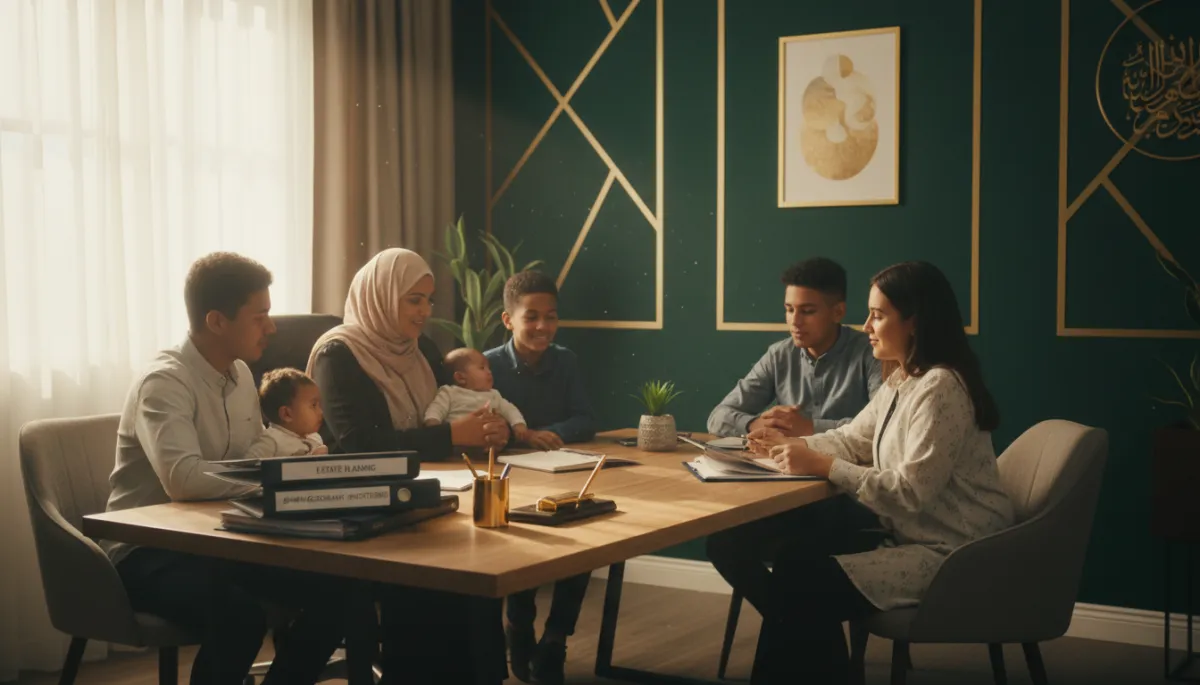
Blended-Family Relationship and Ownership Evidence Checklist
A blended-family estate plan depends on an accurate relationship map and an equally accurate ownership map. Stepchildren, former spouses, maintenance duties, adopted children and jointly held assets must be documented before legal or Islamic distribution questions can be answered.
Educational information only: This is not legal, tax or Shariah advice. Use qualified South African family, estate and Shariah professionals.
1. Draw the family map
List the individual, current and former spouses, biological children, adopted children, stepchildren, deceased children and descendants.
2. Verify each relationship
Keep marriage, divorce, birth and adoption records. Mark disputed or undocumented relationships for legal review.
3. Identify legal parenthood
Do not assume a caregiving relationship has the same succession effect as legal parenthood. Record adoption, guardianship and parental-responsibility orders.
4. Record dependant status
List every person supported by the household, the basis of support, current amounts and expected duration.
5. Collect maintenance obligations
Keep court orders, agreements, payment records and arrears calculations. Review continuing obligations with a legal professional.
6. Confirm the marital property regime
Document each marriage’s legal consequences and any accrual, community-property or contractual claim.
7. Build the ownership register
For each property, account, policy, business or valuable item, record the legal owner, supporting document, acquisition date and funding source.
8. Separate joint and personal assets
Record shares, co-ownership percentages and liabilities. Household use does not establish an equal ownership interest.
9. Map trusts and entities
Identify assets held by companies or trusts, governance documents, beneficial interests and the limits of personal control.
10. Review wills together
Compare both spouses’ wills for conflicting gifts, duplicated assumptions, guardianship wishes, executor appointments and residue clauses.
11. Reconcile nominations
List retirement, policy and account nominations and compare them with current family intentions and provider rules.
12. Document gifts and loans
Separate completed gifts, informal support, loans and promised transfers. Keep delivery, control, repayment and valuation evidence.
13. Prepare the Islamic-review inputs
Give the adviser verified legal relationships, ownership, debts, maintenance and net-estate figures. Ask how stepchildren and non-heirs may be supported lawfully and ethically.
14. Plan for conflict and incapacity
Record communication roles, guardianship concerns, business continuity and who may access information during incapacity or after death.
15. Keep an annual family register
Relationship and dependant changes
Ownership and liability changes
Wills, trusts and nominations
Maintenance and gift records
Legal and Shariah review dates
The Master of the High Court provides estate guidance, while the Children’s Act is an important legal source for child-related questions. A blended-family plan becomes more reliable when every relationship and asset is evidenced rather than assumed.


