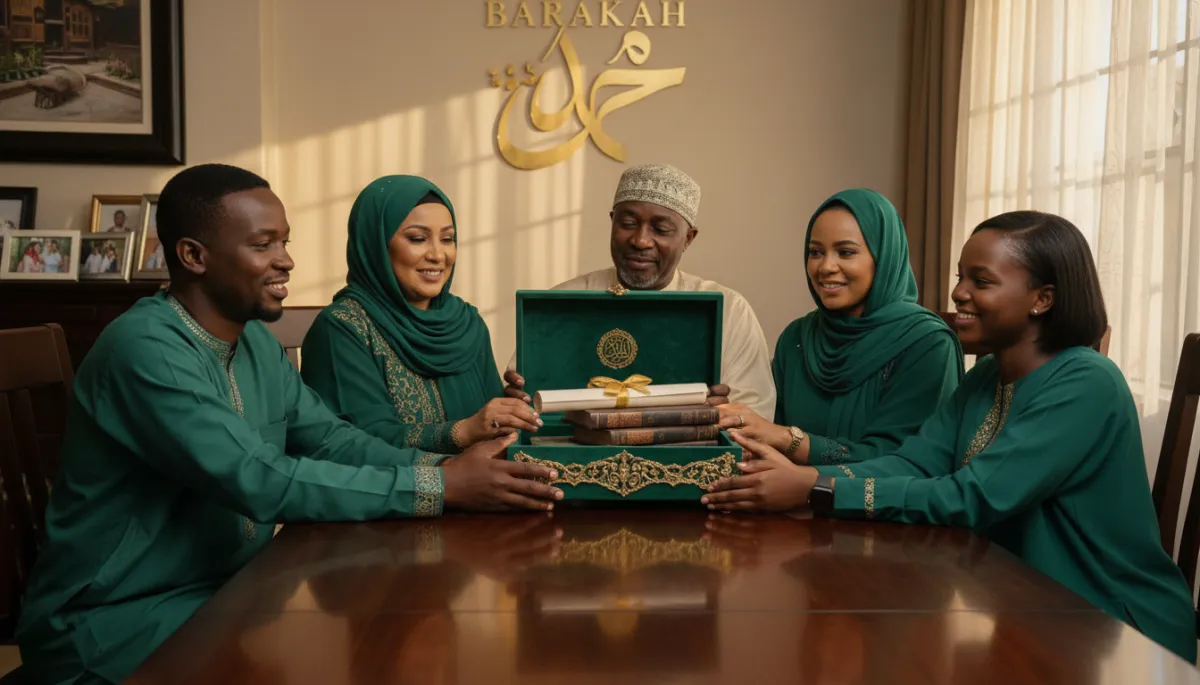
Hibah Estate Planning for Muslim Families in South Africa
Hibah estate planning in South Africa means making a genuine gift during the donor's lifetime, without consideration, and completing the legal, tax and Shariah steps needed for the recipient to become the real owner. It is not simply a sentence in a will, an informal family promise or an entry on a spreadsheet. If the donor still owns and controls the asset at death, the intended gift may not achieve its purpose.
Direct answer: hibah can help a Muslim family support a spouse, child, relative or charitable purpose while the donor is alive. But it should not be used as a slogan for avoiding inheritance rights or tax. Before transferring an asset, confirm the donor's legal capacity and ownership, the recipient, the reason for the gift, acceptance and possession, matrimonial-property consent, valuation, affordability, donations tax, capital gains tax, transfer duty or securities tax, trust or company restrictions, and the effect on the donor's remaining income and estate liquidity.
This guide is general education. It is not a fatwa, legal opinion, tax opinion, conveyancing instruction or personal financial recommendation. The signed documents, current law, asset facts and the determinations of appropriately qualified South African and Shariah professionals govern each case.
What is hibah?
Hibah is commonly used to describe an immediate lifetime gift made without payment in return. The donor gives an identified asset or right to an identified recipient, and the recipient accepts it. Islamic jurisprudence also considers whether the recipient obtained the required possession or control. The precise requirements and the effect of conditions can differ by school of jurisprudence and by the asset involved.
The practical distinction is timing:
a hibah is intended to transfer ownership during the donor's life;
a wasiyyah operates after death and must be coordinated with the applicable Islamic bequest rules and the South African will;
faraid or Islamic inheritance addresses the estate remaining at death after the applicable prior claims and processes;
a waqf dedicates assets to a defined enduring purpose under its governing structure;
sadaqah is charitable giving and may have different recipient and tax consequences; and
a loan or temporary permission to use an asset is not a gift of ownership.
A document labelled “hibah” does not resolve these distinctions. The facts must show what changed, when it changed, who controls the asset, who receives its income, who bears its risks and whether the donor can take it back.
Is hibah allowed in South African estate planning?
South African law permits lifetime donations, subject to the ordinary rules that apply to the donor, the asset and the transaction. Islamic permissibility is a separate inquiry. A transaction should pass both reviews rather than borrowing an answer from one system for the other.
The SARS donations-tax page defines a donation broadly as a gratuitous disposal of property, including a free waiver or surrender of a right. This means hibah can include more than cash. A debt release, transfer of shares, transfer of land or movement of an asset to a trust may require tax analysis even when no money changes hands.
For Shariah purposes, the gift should be real and voluntary. A widely cited narration concerning a parent's gift to one child directs attention to justice among children; Sahih Muslim 1623j records that the Prophet declined to witness an unequal gift in the circumstances described. A family should not convert this principle into a mechanical formula without scholarly review. Differences in need, disability, prior support, family obligation, intention and school of jurisprudence can affect the analysis.
The seven tests for a defensible hibah
Use seven separate tests before signing or transferring anything.
1. Intention and purpose
Write down why the gift is being made. Legitimate objectives may include helping a child with housing, providing for a dependant with additional needs, transferring a family-business interest with mentoring, supporting a spouse, establishing a charitable legacy or simplifying ownership.
Red flags include secrecy, pressure, a sudden unexplained transfer, an intention to place assets beyond lawful creditors, or an arrangement designed to appear complete while the donor retains every benefit. Record the decision while capacity and family context are clear.
2. Capacity, consent and ownership
Confirm that the donor owns the asset and has legal capacity to dispose of it. Identify any co-owner, secured lender, trustee, company or spouse whose approval is required.
Matrimonial property matters. Under the Matrimonial Property Act 88 of 1984, transactions involving a joint estate can require the other spouse's consent, and the Act contains specific rules for donations from the joint estate. Do not assume that registration in one spouse's name settles the question where the couple is married in community of property.
For a Muslim marriage, record both the civil-law status and the Islamic-marriage facts. Do not infer ownership, consent or tax treatment from the religious ceremony alone.
3. Identified asset and recipient
Describe the asset precisely. “My investment” is not enough if the donor has several accounts. Use account identifiers, share quantities, property descriptions, vehicle details or a schedule attached to the agreement.
Identify the recipient and confirm how that person or entity can hold the asset. A minor, trust, company, non-profit organisation or foreign recipient creates additional administration. Confirm guardianship, trustee powers, company restrictions, tax residence and bank or platform requirements before transfer.
4. Acceptance and possession
Record acceptance and the date on which control or possession passes. What constitutes sufficient possession can differ between cash, listed investments, private-company shares, movable goods, immovable property and rights.
For example:
cash should move to an account legally held for the recipient;
shares require the relevant register, platform and company records to change;
land requires a valid written transaction and registration through a conveyancer;
a vehicle requires transfer and licensing records, insurance and physical control to be aligned; and
a business interest may require board, shareholder or member approvals and updated beneficial-ownership records.
If the donor continues using the asset, document the legal basis. A lease, usufruct, loan or retained right may be possible, but it changes the analysis. Do not describe full ownership as transferred while leaving control, benefit and risk entirely with the donor.
5. Tax and transaction costs
Run separate schedules for donations tax, capital gains tax, transfer duty or VAT, securities transfer tax, conveyancing, valuation, platform and advice costs. The same gift can trigger more than one schedule.
6. Islamic fairness and inheritance interaction
List the donor's likely heirs, material gifts already made, each gift's reason and its current value. Ask a qualified scholar to review fairness among children and other affected rights, the donor's school of jurisprudence, possession, conditions and any illness close to death.
A lifetime gift is not the same as an inheritance share. That does not make every lifetime transfer fair or complete. Avoid using hibah to disguise a testamentary direction, punish an heir, manufacture dependence or bypass the ethical purpose of Islamic inheritance.
7. Donor resilience after the gift
Model the donor's position after transfer. A gift that leaves a parent unable to fund housing, care, medical costs, debt or ordinary living expenses can create a new family crisis. Test cash flow, emergency reserves, longevity, disability, care costs and concentration risk before giving away an income-producing or appreciating asset.
Donations tax on hibah in South Africa
For the 2027 year of assessment (1 March 2026 to 28 February 2027), SARS states that the first R150,000 of property donated by a natural person during the year of assessment is exempt from donations tax. This replaced the previous R100,000 annual exemption. The limit applies to the donor's total qualifying donations for the year, not separately to every child or recipient.
The current rate is:
20% on the aggregate taxable value of donations since 1 March 2018 up to R30 million; and
25% on the portion above the cumulative R30 million threshold.
SARS explains that the R30 million test uses the value after applicable section 56 exemptions. The rate is not reset for every recipient.
A simple cash example
Assume a South African resident individual gives an adult child R750,000 cash during the 2027 year of assessment, has made no other relevant donations that year and has not crossed the cumulative R30 million band. On those simplified assumptions:
Calculation | Amount |
|---|---|
Cash donated | R750,000 |
Annual natural-person exemption | (R150,000) |
Illustrative taxable donation | R600,000 |
Illustrative donations tax at 20% | R120,000 |
This example does not decide whether another exemption applies or whether connected transactions should be aggregated. Cash ordinarily does not create a capital gain merely because it is transferred, but funding the cash by selling an investment can create a separate CGT event.
Who declares and pays?
SARS states that the donor is primarily liable. If the donor does not pay within the required period, the donor and recipient can become jointly and severally liable. The donor should submit the IT144 declaration and pay donations tax by the end of the month following the month in which the donation takes effect, unless SARS allows longer.
Keep the signed agreement, valuation, proof of transfer, acceptance, bank or asset register evidence, exemption analysis, IT144 and proof of payment together.
Important exemptions
The SARS 2026 Budget Tax Guide identifies exemptions including dispositions between spouses where the recipient is a tax resident and donations to certain approved public benefit organisations. An exemption should be verified against the parties and transaction. “Spouse”, residence, PBO approval and qualifying purpose are evidence questions, not labels to assume.
The guide also states that casual gifts by a donor that is not a natural person have a separate R20,000 total annual exemption. Do not apply the natural person's R150,000 exemption to a company or ordinary trust.
A gift can trigger capital gains tax
A gift is a disposal for CGT purposes. SARS's CGT overview lists donation as a disposal event. Its proceeds guidance explains that a donation or non-arm's-length transfer to a connected person is generally treated as occurring at market value for CGT purposes.
This means giving away a property, portfolio or business interest can create a taxable capital gain even though the donor receives no cash. The donor may need liquidity for both donations tax and income tax.
A property example
Assume a parent owns a rental property with a market value of R3 million and an adjusted base cost of R1.4 million. Gifting it to a child is not a zero-proceeds event merely because the child pays nothing. The tax practitioner should calculate the deemed market-value disposal, available losses and exclusions, the taxable capital gain, donations tax and the child's resulting base cost.
The child may also face transfer duty and conveyancing costs. SARS states on its transfer-duty page that transfer duty is imposed on property acquired by transaction or in another way and is normally paid by the acquirer. A donation of immovable property is not automatically cost-free.
Do not transfer a family home without also addressing occupation, maintenance, rates, insurance, creditor exposure, divorce risk, death of the recipient and the donor's security of tenure.
Shares and investment accounts
For listed or private-company shares, test market value, base cost, CGT, securities transfer tax, platform restrictions and shareholder-agreement provisions. A platform beneficiary nomination is not the same as a completed lifetime transfer. Confirm the registered holder and beneficial owner after the transaction.
Selling assets first and gifting cash may simplify transfer mechanics, but the sale can crystallise CGT and change market exposure. Transferring the asset directly can still trigger a market-value disposal. Model both routes before acting.
Hibah of a home or other immovable property
Land needs special treatment. The current SARS Transfer Duty Guide explains that a contract for the donation of land must comply with the written and signature requirements applicable to alienation of land. A conveyancer must deal with transfer, SARS declarations, title conditions, bonds, municipal requirements and registration.
Before gifting property, answer:
Is there an outstanding bond, and has the lender approved the proposed transaction?
Who will pay CGT, donations tax, transfer duty, conveyancing and municipal costs?
Will the donor retain occupation, rental income or a registered right?
Who will pay rates, levies, insurance and repairs?
What happens if the recipient dies, divorces, becomes insolvent or wishes to sell?
Does the transaction affect a spouse's rights or the joint estate?
Is the recipient financially able to hold the property?
If the purpose is housing security rather than outright ownership, compare a documented right of occupation, usufruct, trust arrangement, lease or testamentary plan. Each has different legal, tax and Shariah consequences.
Hibah to a trust
A trust can hold gifted assets for beneficiaries or a defined purpose, but gifting an asset to a trust is not the same as gifting it directly to a beneficiary. The trust deed, trustee authority, vesting provisions and administration determine who controls the property and what rights beneficiaries have.
The Master's trust administration guidance distinguishes inter vivos and testamentary trusts and lists the documents required for an inter vivos trust. The Trust Property Control Act requires a trustee to be authorised in writing by the Master before acting in that capacity and requires trust property to be administered under the trust instrument.
Before transferring an asset:
confirm that the deed permits receipt and administration of the asset;
confirm current letters of authority and the required trustee resolution;
identify the donor, trustees, beneficiaries and beneficial owners correctly;
value the asset and calculate tax before transfer;
record whether the transfer is a gift, sale or part gift and part sale;
update the asset register, accounting records and beneficial-ownership records; and
align the trust's investment mandate and distribution policy with its stated Shariah purpose.
Review MuslimFin's guide to trusts and Islamic inheritance for the governance work that continues after formation. A trust is not a filing event that can be ignored once the asset moves.
Hibah of a family-business interest
Giving shares to a child can introduce ownership gradually, but ownership and management should not be confused. A recipient may acquire economic and voting rights without being ready to run the company. Conversely, giving a job title without transferring registered ownership is not a completed gift of shares.
Build a transaction pack containing:
a current independent valuation;
the memorandum of incorporation and shareholder agreement;
pre-emption, consent and transfer restrictions;
board and shareholder approvals where required;
the gift or transfer agreement;
the updated securities register and beneficial-ownership records;
the tax calculation and payment plan;
a dividend, voting and conflict policy; and
a separate development plan for the successor's competence.
Coordinate the transfer with the family's wider Islamic family-office plan. A fragmented gift can weaken control, create sibling conflict or interfere with a future sale if the shareholder architecture is not designed first.
Fairness among children and other heirs
Fairness should be examined before the gift becomes irreversible. Build a lifetime-benefits ledger showing material education support, housing assistance, business capital, debt releases, caregiving arrangements and prior gifts. Record nominal value, date, purpose and, where useful, an inflation-adjusted or current reference value.
The ledger is evidence, not an instruction to equalise every rand. A child with a disability, a dependant providing long-term care or a family member already owning part of a business may have distinct circumstances. A qualified scholar should determine how the relevant Islamic principles apply, including whether equality, proportionate treatment or a justified difference is appropriate under the family's facts and school of jurisprudence.
Discuss the plan with affected family members when safe and appropriate. Transparency cannot cure an invalid transaction, but it can expose assumptions before they become disputes.
Gifts during serious or terminal illness
Islamic jurisprudence gives particular attention to gifts made during an illness associated with death. South African law also examines capacity, undue influence, voluntariness and the legal form of transactions. Do not rush a large transfer when a donor is gravely ill.
Obtain independent capacity and legal evidence, document the circumstances and seek qualified Shariah review. A signature witnessed by relatives does not by itself settle capacity, possession, fairness or the applicable death-illness rules.
How hibah affects the remaining estate
After a valid completed gift, update every estate-planning schedule. Remove transferred ownership only when the evidence supports that result, and add any retained rights, loan claims, tax liabilities or contractual obligations that remain.
Update:
the asset and liability register;
will and Islamic inheritance schedule;
estate-duty and CGT estimates;
executor liquidity forecast;
beneficiary nominations where relevant;
trust and company records;
insurance or Takaful needs;
family balance sheet; and
the secure document index.
Use MuslimFin's Islamic estate-planning guide to keep ownership evidence and death-administration records aligned. The Islamic inheritance calculator may help with education and scenarios, but verified heirs, ownership, debts, costs and qualified review must determine the final estate schedule.
A practical hibah workflow
Step 1: Define the outcome
State the recipient, asset, reason, target date and what problem the gift is meant to solve. Compare hibah with retaining ownership, lending, selling, leasing, creating a right of occupation, using a trust or providing through a will.
Step 2: Verify title and restrictions
Collect title deeds, statements, registers, agreements, marriage documents, trust deeds, letters of authority, loan documents and security records. Identify every consent and restriction.
Step 3: Obtain a defensible valuation
Use an appropriate valuation date and method. Cash is straightforward; private businesses, property, collectables and unlisted interests require stronger evidence. The valuation must support tax, affordability and family-governance decisions.
Step 4: Model tax and cash flow
Calculate donations tax, CGT, transfer duty or VAT, securities tax and transaction costs separately. Identify who pays each amount and from what cash source. Then retest the donor's long-term resilience.
Step 5: Complete Shariah review
Give the scholar the same facts provided to the lawyer and tax practitioner: ownership, conditions, retained use, health, likely heirs, prior gifts, family needs and timing. A generic approval of “hibah” is not an approval of undisclosed terms.
Step 6: Execute and transfer
Sign the correct documents, obtain consents, move possession or registered ownership and update third-party records. Do not stop after signing if the asset requires registration, platform processing or delivery.
Step 7: File and preserve evidence
Submit required tax declarations and payments, retain proof, update the family document vault and tell the responsible executor or record custodian where the evidence is kept.
Step 8: Review the integrated plan
Recalculate the remaining estate, liquidity, inheritance scenarios and investment plan. Review after another major gift, marriage, divorce, birth, death, disability, emigration, business transaction or material tax change.
Documents to keep
For each material hibah, preserve:
written statement of purpose;
donor and recipient identification;
signed gift or transfer agreement;
proof of capacity and independent advice where relevant;
spouse, lender, trustee, company or co-owner consents;
valuation report;
proof of acceptance and possession;
bank, securities, vehicle or deeds evidence showing transfer;
CGT, donations-tax, transfer-duty and other tax calculations;
IT144 and proof of donations-tax payment where applicable;
conveyancing or platform records;
trustee and company resolutions and updated registers;
Shariah opinion or review record; and
updated estate, liquidity and lifetime-benefits schedules.
Keep the final signed versions, not only email drafts. Record document dates and the professional responsible for each conclusion.
Common hibah mistakes
Treating an intention as a completed gift
Telling the family that an asset “belongs” to a child while retaining registered ownership and exclusive control creates uncertainty. Complete the asset-specific transfer steps.
Applying the R150,000 exemption per recipient
The natural-person exemption is an annual total for the donor, not a separate allowance for every donee. Aggregate relevant gifts during the year.
Calculating donations tax but ignoring CGT
Non-cash gifts can trigger a deemed market-value disposal. Calculate both taxes and find the cash to pay them.
Giving away the home without protecting occupation
An informal family promise that a parent may remain in the house is weaker than properly structured, reviewed and recorded rights. Address death, divorce, creditors, sale and maintenance.
Assuming a trust removes tax and administration
The trust needs authorised trustees, valid resolutions, records, beneficial-ownership compliance, accounts, tax filings and governance. The transfer itself needs tax analysis.
Using hibah to avoid a difficult family conversation
Secrecy can amplify suspicion. Record the purpose and fairness analysis and communicate appropriately, while protecting confidential or vulnerable family members.
Leaving the donor financially exposed
Do not sacrifice retirement income, emergency reserves or care funding merely to reduce a future estate. The plan should improve family resilience during life as well as administration after death.
Frequently asked questions
Is hibah the same as a will?
No. Hibah is intended to transfer ownership during life. A will directs what should happen after death and operates through the deceased-estate process. A promised “gift” that takes effect only after death may need to be treated as a testamentary disposition and reviewed under both South African and Islamic rules.
Does hibah avoid estate duty?
A genuine completed lifetime gift may mean the donor no longer owns that asset at death, but that is not a complete tax answer. Donations tax, CGT, transfer duty, retained rights, deemed-property rules, debt, solvency and the timing and validity of the transfer all require review. Avoid describing hibah as an automatic estate-duty exemption.
Can I give more than R150,000?
Yes, but the first R150,000 natural-person annual exemption does not prohibit larger gifts. The excess may attract donations tax unless another exemption applies. Calculate the full transaction before transfer.
Can I give my home to my child and continue living there?
Potentially, but continued occupation must be deliberately structured. Title transfer, a usufruct or other right, bond consent, tax, expenses, creditor exposure and Shariah possession requirements should be reviewed together.
Can I give one child more than another?
Do not assume either a universal prohibition or unrestricted freedom. Islamic sources emphasise justice in gifts to children, while facts such as need, disability, prior provision and school of jurisprudence may matter. Obtain fact-specific scholarly review and document the reason.
Can a gift be reversed?
Do not rely on easy reversal. The legal and Shariah result depends on completion, asset, agreement, relationship, conditions and applicable jurisprudence. Plan as though a completed gift changes ownership permanently unless qualified advisers establish otherwise.
Is a beneficiary nomination a hibah?
Not automatically. A nomination may direct contractual payment on an event without transferring present ownership. Review the specific policy, investment or fund rules and the Islamic and estate consequences.
What if the recipient is a minor?
Confirm who can accept, hold and administer the asset, which powers that person has, how income and capital may be used, and what happens when the child reaches majority. A trust or other structure may be considered, but it creates its own costs and governance.
Should hibah replace my Islamic will?
No. Lifetime transfers and the will should be coordinated. The will remains necessary for assets and obligations existing at death, executor appointment, guardianship and the intended Islamic estate process.
The MuslimFin family-office role
MuslimFin Family Office can coordinate the information needed for a hibah decision: the family balance sheet, ownership map, prior-gifts ledger, cash-flow model, estate-liquidity schedule, trust and company records, Shariah questions and implementation checklist. Legal drafting, conveyancing, tax opinions, valuations and fatwa decisions remain with appropriately qualified professionals.
The useful output is not a product recommendation. It is one reconciled file showing:
what the family wants to achieve;
who owns the asset now and after transfer;
what evidence completes the gift;
what the transaction costs and taxes may be;
how the donor remains financially secure;
how fairness and Islamic requirements were reviewed; and
how the remaining estate plan changes.
That evidence-led approach allows hibah to serve family responsibility without becoming an undocumented shortcut that creates tax, ownership or inheritance disputes later.
Final checklist
Before completing a hibah, confirm all of the following:
the donor has capacity, authority and verified ownership;
the recipient and asset are precisely identified;
matrimonial, lender, trust and company consents are complete;
the recipient accepts and obtains the required possession or control;
the valuation is current and defensible;
donations tax, CGT, transfer duty, securities tax and costs are separately modeled;
the donor retains adequate income, housing, liquidity and care funding;
fairness, prior gifts, illness and Islamic inheritance interaction receive qualified Shariah review;
legal documents and asset registers show the same transaction;
declarations and tax payments are submitted on time; and
the will, trust records, estate calculation and family balance sheet are updated.
A hibah is strongest when the intention, legal transfer, tax evidence, family fairness and Shariah review all describe the same completed transaction.


