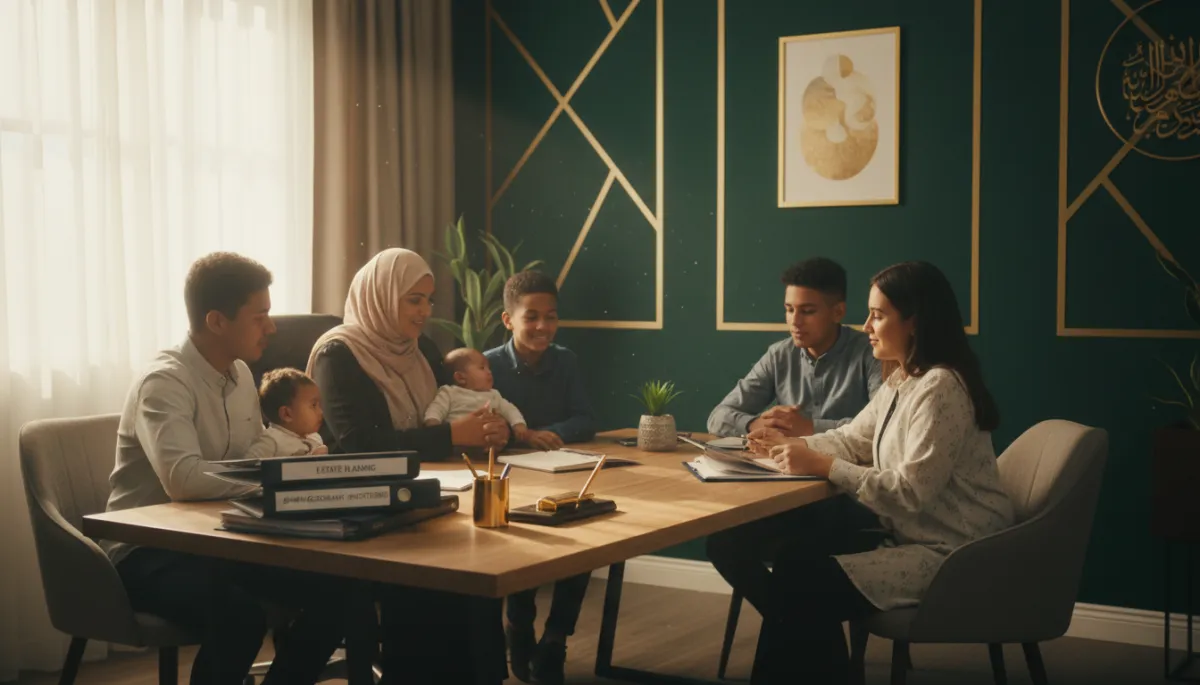
Islamic Inheritance for Stepchildren and Adopted Children
Stepchildren and legally adopted children can be treated differently under South African intestate succession and Islamic inheritance. A South African adoption generally creates a legal parent-child relationship for statutory purposes, while a stepchild without adoption is not automatically the stepparent's descendant. Under the general Islamic framework, care and love do not change biological lineage or automatically create a fixed inheritance share. A thoughtful family therefore needs a valid will, verified family records and a funded plan rather than an informal promise.
This difference does not justify treating a child as less loved or less protected. It means the family must distinguish legal status, Islamic heirship, guardianship, maintenance, permitted bequests, lifetime gifts, trusts and beneficiary nominations. Each tool has its own rules.
This article is educational, not a ruling for a particular family. Adoption type, biological parentage, marriage, foster care, guardianship, existing heirs and the applicable school of Islamic jurisprudence can change the result. Use a South African estate attorney and a qualified Shariah scholar together.
The direct answer
For a blended or adoptive Muslim family in South Africa:
- identify every child's biological, legal, adoptive, step, foster and guardianship relationship;
- determine who is a South African legal descendant;
- determine who is an Islamic fixed heir under the verified facts;
- calculate the estate only after ownership, debts, costs and tax;
- use a valid will for permitted provision that does not arise automatically;
- consider lifetime gifts, trusts, education funding and risk benefits separately;
- appoint guardians and trustees based on legal authority and capability; and
- review the plan after every birth, adoption, marriage, divorce or death.
Do not assume the South African statutory result will reproduce the Islamic result. Do not assume an Islamic family understanding will be implemented by the Master without a legally effective will and supporting documents.
Four relationships that must not be confused
| Relationship | South African legal question | Islamic estate question |
|---|---|---|
| Biological child | Is parentage established? | Does lineage create fixed-heir status? |
| Legally adopted child | What does the adoption order provide? | How should the child be supported without changing lineage rules? |
| Stepchild | Was there an adoption, will, trust or enforceable obligation? | Is the child a fixed heir of the stepparent, or should another permitted tool be used? |
| Foster child or child in care | What placement and parental rights exist? | What support, gift or bequest can be arranged lawfully and fairly? |
A child may fit more than one description. For example, a spouse can adopt the other spouse's biological child. Obtain the actual court order and do not work from family labels alone.
South African intestate succession
The Master's intestate-succession guidance says that an adopted child is deemed a descendant of the adoptive parent or parents for intestate succession and generally not a descendant of the natural parents, subject to the stated exception involving a natural parent who is also an adoptive parent or was married to the adoptive parent at adoption.
This is a statutory rule. It is not itself an Islamic inheritance ruling.
Legally adopted children
The Children's Act regulates South African adoption, parental responsibilities and children's courts. Keep the final adoption order, amended birth records, identity documents and any order preserving a biological parent's rights. A family should not assume that informal care, surname use or calling someone a child creates a legal adoption.
Stepchildren
A stepchild who was not adopted is not automatically the stepparent's descendant merely because the adults married. If the stepparent dies intestate, the child may receive nothing from that estate unless another legal basis applies. A valid will is therefore critical.
Foster children and informal care
Foster care, guardianship and adoption are different legal arrangements. The Department of Justice's adoption information explains that adoption involves a formal process and court order. Preserve the exact order that governs the child.
Islamic lineage and heirship
Qur'an 33:5 preserves biological attribution. Under the general Islamic framework, adoption does not transform biological lineage into lineage through the adoptive parent for fixed-share inheritance. A stepchild likewise does not ordinarily become the stepparent's fixed heir merely through marriage.
This does not prevent lawful care, education, gifts or permitted testamentary provision. It requires those decisions to be designed explicitly.
Do not calculate before verifying the family tree
An adopted child's legal status, biological ancestry and Islamic heirship may point in different directions. The scholar needs accurate information about biological parents, surviving spouses, biological children, parents and other potential heirs. The attorney needs the adoption and family court records.
Do not erase identity to simplify the estate
Preserve known parentage and original records with appropriate privacy controls. Emotional belonging and legal care can be honoured without making inaccurate lineage statements.
Use a valid South African will
The Master's wills guidance explains that a will must comply with formal requirements and recommends competent drafting. An Islamic estate plan that is not legally executable can expose the child to the very harm the family intended to prevent.
The will can coordinate:
- the Islamic distribution method;
- a permitted bequest for a non-heir;
- guardian nominations;
- a testamentary trust for a minor;
- trustee powers and succession;
- education and maintenance funding;
- treatment of a family home;
- business interests; and
- an executor and substitute.
Confirm the permitted bequest capacity
Islamic jurisprudence commonly permits testamentary provision for a non-heir within defined limits after debts and obligations, subject to detailed rules. Do not hard-code a bequest before identifying the net estate and all heirs. Ask the scholar to confirm the recipient, limit, priority and whether any post-death heir consent would be relevant.
Avoid vague wording
Phrases such as "treat all my children equally" can create conflict when legal and Islamic definitions differ. Name beneficiaries accurately, define the calculation method and state how the clause interacts with the Islamic distribution schedule.
Lifetime gifts can help, but only if completed properly
A genuine lifetime gift can provide housing, education capital or another asset outside the eventual inheritance calculation, but intention alone is insufficient. Confirm ownership, capacity, acceptance, delivery or possession, spouse consent where relevant, tax, affordability and evidence.
Do not impoverish the donor, prejudice dependants or create an artificial transaction that remains under the donor's unrestricted control. Review fairness across biological, adopted and stepchildren without pretending every relationship has the same inheritance rule.
The MuslimFin estate-planning guide explains why gifts, trusts and wills must be coordinated rather than used as isolated shortcuts.
Trusts for minor or vulnerable beneficiaries
A testamentary trust can hold an inheritance or bequest for a minor and apply it under defined rules. Without suitable arrangements, money due to a minor may interact with the Guardian's Fund and the estate process.
Design the trust around the child's needs:
- age and vulnerability;
- education, healthcare and maintenance;
- housing stability;
- disability or special needs;
- distribution ages and safeguards;
- investment and Shariah-screening mandate;
- trustee independence and competence;
- reporting to guardians and beneficiaries; and
- replacement of trustees.
Do not appoint a trustee merely because the person is a relative. The trustee must understand fiduciary authority, records, investments, conflicts and the child-specific mandate. See MuslimFin's testamentary-trust guide for the detailed governance questions.
Guardianship is not ownership
A guardian cares for the child and exercises legally recognised responsibilities. A trustee administers trust property. An executor administers the deceased estate. These roles can be held by different people and should not be confused.
The Master's guidance recommends that a sole guardian indicate a preferred guardian in the will. A nomination is important, but the child's best interests and the legal process remain relevant. Record backups, practical care arrangements, housing, school, medical information, family contact and funding.
Beneficiary nominations need separate review
Retirement funds, policies, Takaful arrangements and employee benefits do not all follow the will in the same way.
For each benefit, record:
- the legal product provider;
- owner and life covered;
- current nominee or beneficiary;
- whether the provider uses discretion;
- the child's legal status and dependency evidence;
- trust or guardian payment mechanics;
- tax and estate treatment; and
- product-level Shariah evidence.
Do not assume naming a stepchild on a form is valid, invalid or conclusive without checking the governing contract and statute.
The family home needs a funded plan
If a stepchild or adopted child lives in the family home, death can disrupt both occupation and ownership. Test:
- who owns the property;
- what debt is secured against it;
- whether the surviving parent can afford it;
- whether other heirs must receive value;
- whether a trust or right of occupation is legally workable;
- who pays rates, maintenance and cover; and
- what happens if the home must be sold.
A promise that the child may stay is not enough. The plan needs lawful rights, liquidity and responsible administration.
A practical planning matrix
| Objective | Possible tool | Required checks |
|---|---|---|
| Immediate education support | Lifetime gift or dedicated investment | Ownership, tax, affordability and Shariah screening |
| Provision at death | Permitted will bequest | Valid will, net estate, Islamic limit and heir analysis |
| Long-term minor protection | Testamentary trust | Trustee powers, costs, investment mandate and distributions |
| Housing continuity | Ownership, bequest, trust or funded occupation right | Title, debt, liquidity and other heirs |
| Care after parents die | Guardian nomination and care plan | Court process, best interests, backups and funding |
| Risk funding | Takaful or other reviewed benefit | Contract, nomination, claims, tax and Shariah evidence |
| Business participation | Shares, trust interest or succession arrangement | Governance, valuation, competence and liquidity |
No tool should be selected only because it changes an inheritance fraction. It must serve a genuine family objective and operate under South African law.
Twelve implementation steps
- Build a verified family tree showing biological and legal relationships.
- Obtain every adoption, guardianship, foster-care and divorce order.
- Separate personal, joint, company and trust ownership.
- Identify all Islamic fixed heirs with a qualified scholar.
- Calculate realistic debts, costs, tax and liquidity.
- Define the intended support for each non-heir child.
- Choose between lifetime gifts, a will bequest, trust funding and risk benefits.
- Draft and execute a valid South African will.
- Appoint capable executors, guardians and trustees with substitutes.
- Align nominations, school funding and the home plan.
- Store originals and an evidence index securely.
- Review after every family or ownership change.
Common mistakes
Assuming love creates legal inheritance
Family commitment is real, but inheritance requires legal and Islamic classification. Document the intended provision.
Assuming legal adoption creates Islamic lineage
South African statutory treatment and Islamic fixed-heir status are separate questions.
Leaving everything to a surviving spouse informally
The spouse may die, remarry, face creditors or change the plan. Protect the child directly through valid structures.
Giving a minor money outright
Consider legal payment mechanics, guardianship, the Guardian's Fund and a properly governed trust.
Using a trust without funding or governance
A trust clause alone does not create cash, appoint competent people or resolve investment and distribution decisions.
Hiding biological or adoptive facts
Incomplete facts can invalidate both the legal analysis and the Islamic calculation.
How MuslimFin can help
MuslimFin Family Office can coordinate the family, financial and governance workstreams while qualified attorneys, tax professionals and Shariah scholars handle their regulated or specialist decisions. This can include:
- mapping biological, legal and dependency relationships;
- reconciling assets, liabilities and entities;
- preparing the will, trust, guardian and nomination evidence pack;
- modelling education, housing and care funding;
- coordinating lifetime-gift and liquidity analysis;
- aligning investments with a recorded Shariah mandate;
- testing executor, guardian and trustee succession; and
- incorporating the plan into the annual family review.
The Islamic estate-planning checklist and inheritance calculator can support preparation, but neither replaces case-specific advice.
Frequently asked questions
Does an adopted child inherit under South African law?
The Master's guidance says an adopted child is deemed a descendant of the adoptive parent or parents for intestate succession, subject to the stated statutory exception involving a natural parent.
Does an adopted child automatically receive an Islamic fixed share?
Under the general Islamic framework, legal adoption does not create biological lineage for fixed-share inheritance. Obtain a qualified ruling on the facts.
Does a stepchild inherit automatically from a stepparent?
Usually not merely because the parent married the stepparent. Check for adoption, a valid will, trust, nomination or another legal basis.
Can a stepchild receive something under an Islamic will?
A non-heir may potentially receive a permitted bequest within Islamic limits. The scholar and attorney should confirm the amount, wording and interaction with heirs.
Can I give an adopted child assets during my lifetime?
Yes, a genuine lawful gift may be possible. Confirm capacity, ownership, completion, fairness, tax and donor security.
Should I change the child's surname or hide biological parentage?
Do not alter or conceal lineage information for estate convenience. Follow South African legal records and obtain Islamic guidance on naming and identity.
What if the child is still a minor when I die?
Coordinate guardian nomination, immediate care funding and a suitable testamentary trust or other lawful payment arrangement.
Can the same person be guardian and trustee?
It may be legally possible in some circumstances, but concentration, skill and conflict risks should be assessed. Independent oversight can be valuable.
Does foster care equal adoption?
No. Foster care and adoption are distinct legal arrangements. Obtain the actual order and current status.
Can all children simply agree to equal shares after death?
Do not assume an agreement is valid or free of tax, consent and Shariah consequences. No heir should be pressured to surrender a right.
Does a beneficiary nomination solve the whole problem?
No. Its effect depends on the benefit, contract and statute. It does not replace the will, guardianship or full estate plan.
What records should the family keep?
Keep birth and adoption records, court orders, marriage and divorce documents, the original will, trust documents, guardian details, asset and liability schedules, nominations and Shariah advice.
When should the plan be reviewed?
Review annually and after any birth, adoption, fostering, marriage, divorce, death, disability, emigration or material ownership change.
Practical next step
Create one relationship schedule with a row for every child. Record biological parents, legal parents, adoption or care order, current guardian, dependency, South African intestate position, provisional Islamic heir status, intended support, funding tool and missing evidence. Give the same schedule to the attorney and Shariah scholar so their advice starts from identical facts.
A good plan protects the child's dignity without blurring the rules. It combines truthful lineage, legally effective care, funded provision and a verified Islamic distribution rather than leaving a vulnerable child dependent on goodwill after death.


