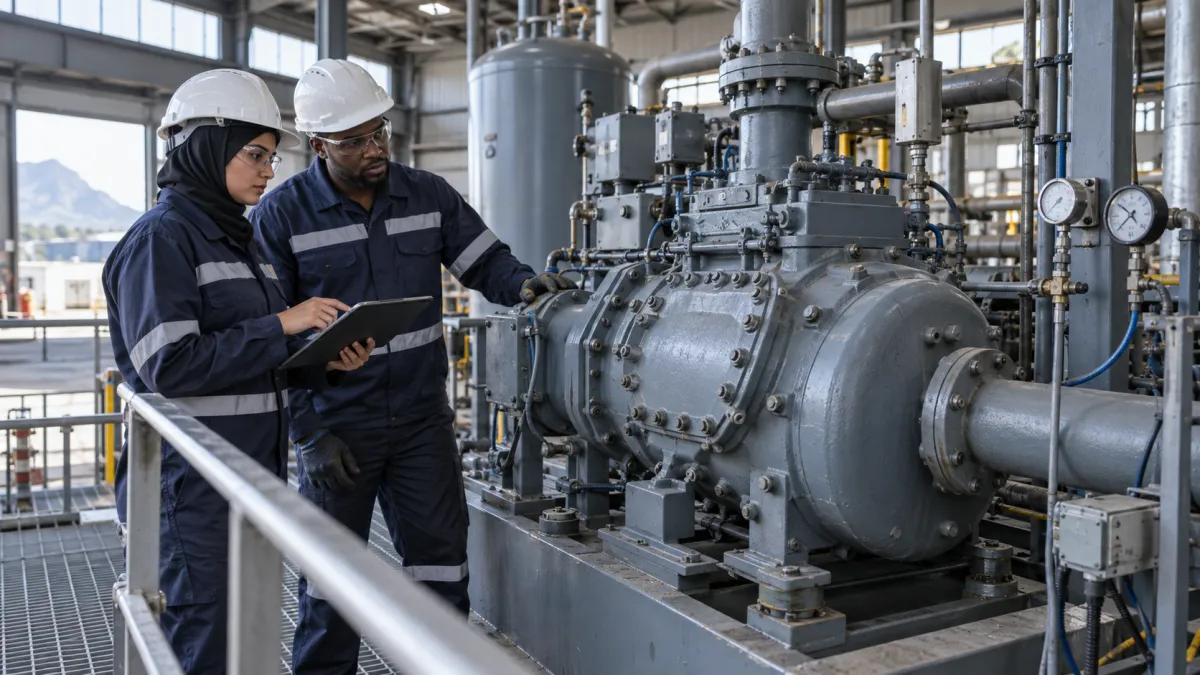
Machinery Breakdown Takaful South Africa Guide
Availability note: This is a machinery-risk planning guide, not confirmation that a machinery-breakdown Takaful product is currently available in South Africa. Check availability, capacity, policy wording and Shariah approval for the actual placement.
Machinery breakdown Takaful in South Africa may protect insured plant and equipment against sudden and unforeseen internal mechanical or electrical damage, subject to the actual certificate or policy. It can address risks that ordinary fire and commercial-property protection may not cover, including internal failure of motors, compressors, transformers, production lines, refrigeration plant, boilers and other scheduled machinery.
The word “breakdown” does not turn maintenance, wear or gradual deterioration into an insured event. A sound programme begins with a complete equipment register, installed replacement values, critical-spares analysis, planned maintenance, statutory inspections, alarm records and a realistic recovery plan. The physical repair, spoiled stock and lost operating income may also sit in three different sections and require separate triggers, limits and evidence.
Muslim-owned businesses should perform product-specific Shariah due diligence. Examine how the participant risk fund operates, how the operator is paid, how funds are invested, how surplus and deficit are treated, what retakaful or reinsurance is used and which current Shariah oversight applies. Where suitable Takaful capacity is unavailable for a material business risk, record the search and obtain qualified guidance on necessity and proportionality.
This guide is general education, not insurance advice, engineering advice, occupational-safety advice, legal advice, tax advice, claims advice or a fatwa. Obtain professional advice for the actual machinery, business and wording.
The direct answer
What machinery breakdown Takaful can cover
It can cover qualifying sudden internal physical damage to declared machinery, together with specified repair, replacement or additional costs. Protection only applies within the definitions, limits, exclusions and conditions of the selected wording.
How it differs from commercial property protection
Commercial property protection commonly responds to external events such as fire, storm, impact or theft. Machinery breakdown focuses on internal mechanical or electrical failure. The sections should be coordinated because one incident can involve both.
What it usually does not cover
Wear, corrosion, erosion, gradual cracking, defective consumables, routine servicing and the cost of correcting an existing defect are commonly excluded or restricted. Consequential damage can be treated differently from the failed component.
Why interruption and stock need separate attention
Repairing a compressor does not reimburse weeks of lost gross profit, nor does it automatically cover refrigerated stock that deteriorates. Machinery interruption and deterioration-of-stock extensions need their own sums insured, waiting periods and triggers.
Build a complete machinery register
Identify every machine
Record manufacturer, model, serial number, year, duty, output, location and legal owner. Include standby units, hired plant, mobile equipment and machines temporarily away for repair if relevant.
Include connected components
A production asset can include motors, drives, controls, switchgear, cabling, software, foundations, piping and cooling. The accounting asset name may be too broad to prove what was insured.
Record operating conditions
Document hours, loads, temperatures, pressures, vibration, start-stop cycles and environment. Dust, moisture, corrosive chemicals and unstable power materially change failure risk.
Separate critical from non-critical equipment
Rank equipment by safety impact, lost output, repair lead time and availability of alternatives. A low-value controller can stop a high-value line for months.
Map ownership and responsibility
The property owner, operating company, financier, lessor and maintenance contractor can each have a different interest. Align asset-finance agreements, leases, service contracts and the Takaful schedule.
Track additions and disposals
New plant, upgraded controls and removed equipment should trigger schedule changes. Automatic additions may have notification deadlines and value limits.
Value equipment as installed
Purchase price is not the full value
Installed replacement value may include the machine, freight, duties, exchange-rate exposure, foundations, electrical work, piping, professional fees, commissioning and testing.
Allow for imported equipment
Imported plant can be affected by currency movements, factory lead times, shipping, customs and scarce technical labour. A historic rand invoice may materially understate replacement cost.
Address obsolete machinery
An obsolete machine may not have a like-for-like replacement. Agree how modern equivalents, increased capacity, betterment and unavailable parts will be treated.
Identify expediting costs
Overtime, express freight and air freight may shorten downtime but require explicit limits. Compare the expediting-cost limit with the daily interruption exposure.
Test average or underinsurance
If the declared value is below the value at risk, some wordings can reduce a claim proportionately. Test the clause using current installed replacement values.
Review values regularly
Update values at least annually and after material exchange-rate moves, acquisitions, modifications, relocations or supplier notices that affect availability.
Understand common breakdown causes
Electrical failure
Short circuits, insulation failure, arcing, winding damage, phase imbalance and internal surge can damage motors, transformers and switchgear. The precise cause and affected component matter.
Mechanical failure
Shaft, bearing, gear, coupling, lubrication and fatigue failures can cause sudden damage. Inspect the fracture and preserve failed parts before authorising disposal.
Pressure and vacuum events
Boilers, compressors, autoclaves and pressure vessels can fail through pressure, control or material problems. Statutory inspection and competent-person records are central to safety and claims evidence.
Operator error
Incorrect settings, start-up sequence, loading or shutdown can contribute to damage. Coverage depends on the wording, training, supervision and whether the act was accidental.
Refrigeration failure
Compressors, condensers, evaporators, controls and refrigerant systems can fail. Machinery damage, refrigerant loss, spoiled stock and interruption should be analysed separately.
Power-quality events
Voltage fluctuation, phase loss, harmonics and switching events can affect equipment. Grid interruption alone is not necessarily physical damage or an insured trigger.
Apply South African safety and compliance controls
Occupational health and safety
The Occupational Health and Safety Act 85 of 1993 addresses workplace health and safety and the use of plant and machinery. Insurance or Takaful does not replace an employer's statutory duties.
Electrical machinery
The Department of Employment and Labour publishes the Electrical Machinery Regulations, 2011 standards incorporation. Identify which current regulations, standards, certificates and competent persons apply to the actual installation.
Pressure equipment
Boilers and pressure vessels can require registration, inspection, certification and authorised oversight under applicable pressure-equipment rules. Keep design, repair and inspection records with the asset file.
Machine guarding and safe systems
Guarding, interlocks, lockout procedures, emergency stops and training protect people and equipment. A safety bypass should be treated as an urgent defect, not an operating shortcut.
Contractor control
Verify qualifications, permits, method statements, supervision and handover when contractors install, maintain or modify machinery. Record changes to protective devices and control logic.
Change management
Modified speed, output, materials, software or process conditions can invalidate prior risk assumptions. Engineering, safety and protection reviews should precede commissioning.
Make maintenance evidence usable
Use risk-based maintenance
Combine manufacturer requirements with condition, duty and criticality. Calendar servicing alone may be inadequate for heavily loaded or safety-critical equipment.
Monitor condition
Vibration, oil analysis, thermography, insulation tests, temperature and pressure trends can identify deterioration before failure. Set clear alert levels and action owners.
Close defects
A report without evidence of repair is not a control. Record the defect, priority, interim measure, responsible person, completion date and verification.
Retain service records
Keep work orders, invoices, technician reports, replaced-part details and readings. Records help distinguish a sudden failure from prolonged deterioration.
Manage lubricants and consumables
Incorrect oil, refrigerant, filters, belts or seals can accelerate failure. Control specifications, storage, contamination and installation.
Test standby systems
A generator, spare compressor or redundant pump provides little resilience if it does not start under load. Test switching, fuel, batteries, capacity and operating competence.
Examine key exclusions and conditions
Wear and gradual deterioration
Protection is not a maintenance budget. Bearings, belts, seals, linings and other parts consumed through normal operation may be excluded even when replaced during a larger repair.
Known defects
Unresolved alarms, leaks, vibration or inspection findings can create a serious coverage and governance problem. Disclose material facts and document risk treatment.
Defective design, material or workmanship
The cost of correcting a defect can be excluded while resulting damage receives different treatment. Obtain engineering causation evidence before accepting a simple label.
Testing and commissioning
New, rebuilt or modified plant may require erection-all-risks, testing or commissioning protection. Ordinary operational cover may not apply until formal handover.
External perils
Fire, flood, theft, impact and malicious damage can belong under property protection. Avoid a gap or dispute by coordinating the commercial property Takaful guide.
Cyber and software loss
Physical damage, corrupted control software, ransomware and loss of data are different exposures. Machinery cover does not automatically provide cyber response or data restoration.
Coordinate the connected protections
Machinery interruption
Measure lost production, insurance gross profit, continuing expenses and reasonable increased costs. Select an indemnity period that reflects diagnosis, manufacture, shipping, installation, testing and ramp-up.
Deterioration of stock
Food, pharmaceuticals, chemicals and biological materials can deteriorate after refrigeration or environmental-control failure. Define stock, temperature thresholds, alarm requirements, waiting periods and valuation.
Commercial property
An internal breakdown can cause fire, while a fire can damage machinery. Ensure deductibles, values, causation and claims handling work across both sections.
Business interruption
The business interruption Takaful guide explains gross profit, dependencies, increased costs and indemnity periods. Test whether breakdown is an insured underlying trigger.
Electronic equipment and cyber
Servers, medical electronics, control systems and embedded software may need specialist electronic-equipment and cyber protection. Map physical components, software, data and revenue dependencies.
Marine cargo and delay
Replacement parts may travel internationally. The marine cargo Takaful guide covers transit interests, while delay in arrival usually needs separate analysis.
Perform Takaful and regulatory due diligence
Verify regulated parties
South Africa's Insurance Act 18 of 2017 provides the prudential framework for insurance business. Verify the relevant insurer, intermediary and permissions through current official registers.
Understand the participant fund
Ask how contributions enter the risk fund, how claims are paid and whether the operator acts through Wakala, Mudarabah, a hybrid or another documented model.
Identify operator remuneration
Obtain the disclosed agency, performance or administration fees. The commercial incentives should be transparent.
Review investments
Request current information on the investment and screening of participant and shareholder funds rather than assuming compliance from a product label.
Examine surplus and deficit
Determine who may receive underwriting surplus, how a deficit is supported and how any Qard or equivalent support is repaid.
Review retakaful and reinsurance
Large machinery and catastrophe limits may require external capacity. Ask what retakaful was sought, when conventional reinsurance is used and what governance supports the decision.
Verify Shariah oversight
Identify the current Shariah board or adviser, scope, approval date, audit process and treatment of non-compliant income. The IFSB-8 Takaful governance standard provides relevant governance principles.
Prepare for a machinery claim
Make the site safe
Stop the machine, isolate energy and protect people. Follow emergency, lockout and authority requirements before investigating or restarting.
Notify promptly
Notify the operator, insurer, intermediary, maintenance provider, lessor and other required parties. Obtain approval before major dismantling except where immediate safety or loss mitigation requires action.
Preserve failed parts
Retain bearings, shafts, windings, circuit boards, lubricants and debris. Photograph their position and chain of custody. Do not permit premature scrapping.
Capture operating data
Secure alarms, historian files, temperature, pressure, vibration, energy, maintenance and operator logs. Prevent automatic overwriting.
Establish causation
Use an appropriately qualified engineer or specialist. Separate initiating cause, failed component, resulting damage, pre-existing wear and recommended improvement.
Reconcile the costs
Separate insured repair, maintenance, betterment, temporary equipment, expediting, professional fees, spoiled stock and interruption. Retain quotations, invoices and proof of payment.
Protect recovery rights
Preserve warranties, service agreements and evidence against manufacturers, suppliers or contractors. Do not waive rights without informed approval.
A worked South African example
The business
A Cape Town halal-food manufacturer uses two refrigeration compressors, a spiral freezer, packaging lines, a generator and rooftop solar. One compressor carries most of the peak load, and a replacement unit has a five-month imported lead time.
The hidden gaps
The schedule lists “plant and machinery” at the old purchase price. Freight, duties, foundations and controls are omitted. There is no deterioration-of-stock section, the generator cannot carry the freezer and interruption protection responds only to property perils.
The event
An internal bearing failure damages the compressor shaft and casing. Production stops, temperature rises and R1.8 million of stock requires testing and disposal. An emergency rental compressor and airfreighted parts reduce downtime.
A reconciled loss model
The qualifying physical repair is R1.25 million, rental and expediting cost R420,000, and spoiled stock R1.8 million. The illustrative eight-week interruption impact is R2.1 million after saved costs and excludes the R420,000 rental and expediting costs and the R1.8 million stock loss, so those amounts are not counted twice. The illustrative combined exposure is R5.57 million before deductibles, waiting periods, sublimits and coverage decisions.
The better pre-loss structure
The business records installed values, vibration trends, critical spares and generator capacity; tests machinery damage, deterioration and interruption as connected sections; agrees stock evidence and temperature alarms; and documents Takaful governance. The numbers are reconciled monthly during peak production.
The lesson
The machine's repair price is only one part of the exposure. Stock, expediting and lost production can exceed it.
A 12-step implementation process
Map legal ownership, finance, leases and maintenance responsibility.
Build a serial-numbered machinery and connected-component register.
Rank equipment by safety, output and replacement lead time.
Obtain current installed replacement values.
Record operating conditions, protective devices and dependencies.
Verify statutory inspections, certificates and competent persons.
Implement risk-based maintenance and defect closure.
Model physical damage, stock deterioration and interruption separately.
Test critical spares, standby capacity and supplier alternatives.
Compare exclusions, deductibles, waiting periods and extensions.
Complete regulatory and product-specific Shariah due diligence.
Issue a claims protocol and review after every material change.
Frequently asked questions
Is machinery breakdown Takaful available in South Africa?
Availability depends on current providers, capacity, equipment and limits. Verify the actual regulated parties, wording and Shariah governance; do not rely on a generic label.
Does commercial property Takaful cover machinery breakdown?
Not necessarily. Property protection may cover machinery damaged by an external insured peril but exclude internal mechanical or electrical failure.
Is wear and tear covered?
Ordinary wear and gradual deterioration are commonly excluded. Resulting sudden damage may be treated differently under the wording.
Are generators, solar and inverters machinery?
They can be scheduled as property, machinery or specialist electronic equipment depending on ownership and wording. Confirm classification, values and triggers.
Does load shedding count as machinery breakdown?
Power interruption alone is not necessarily insured physical damage. Establish the physical cause, affected component and applicable extension.
Can spoiled refrigerated stock be claimed?
Only if an appropriate deterioration-of-stock section or extension applies and its trigger, waiting period, limits, alarms and evidence requirements are met.
Does the cover pay lost income?
Not automatically. Machinery interruption or business interruption must be arranged with the correct underlying trigger and values.
Is hired equipment included?
Only if the definitions, schedule and hiring contract support it. The hirer and owner may have different responsibilities.
What if the machine is obsolete?
Agree the valuation and settlement approach in advance. A modern replacement may introduce betterment, increased capacity and installation changes.
What records matter most after failure?
The asset schedule, maintenance history, operating data, alarms, photographs, failed parts, engineer's cause report, quotations and invoices are central.
Final checklist
Every machine and connected component is identified.
Ownership, finance and contractual responsibility are mapped.
Installed replacement values are current.
Critical equipment and lead times are ranked.
Maintenance and defect closure are evidenced.
Statutory inspections and certificates are current.
Standby plant is tested under realistic load.
Wear, defect and testing exclusions are understood.
Expediting, air-freight and temporary-equipment limits are adequate.
Deterioration-of-stock triggers and alarms are tested.
Machinery interruption values and periods are realistic.
Property, cyber, cargo and liability boundaries are mapped.
Regulated providers and permissions are verified.
Takaful governance and Shariah oversight are documented.
Claims evidence and failed-part preservation are pre-planned.
How MuslimFin Family Office helps
MuslimFin Family Office can help South African manufacturers, property operators, healthcare practices, cold-chain businesses and other equipment-dependent firms map machinery ownership, values and dependencies; compare available Takaful or insurance structures; document product-specific Shariah and regulatory due diligence; and coordinate suitable engineering, valuation, insurance, legal, tax and Shariah specialists.
The objective is not merely to add a machinery section. It is to align the equipment register, installed values, maintenance evidence, statutory controls, protection wording, continuity plan and claims file in one governed risk framework.


