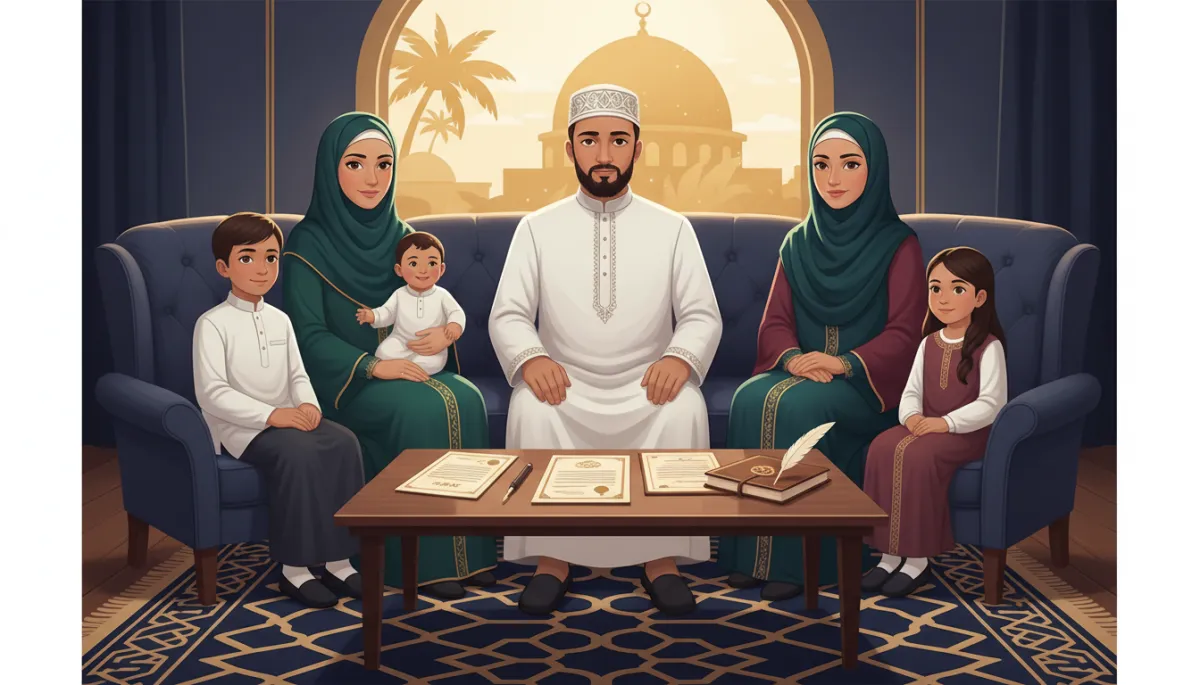
How Islamic Inheritance Works in a Polygamous Marriage in South Africa
The Reality of Polygamous Families in South African Islamic Inheritance
Polygyny — a man married to more than one wife — is permissible under Islamic law, subject to strict conditions of fairness and equal treatment. In South Africa, many Muslim men are in polygamous marriages, some with wives registered under civil law and others married only under Islamic rites (nikah).
When such a man dies, his estate must navigate two different legal systems simultaneously: faraid (Islamic inheritance law) and South African civil law. The intersection is complicated, and getting it wrong can leave some wives and children significantly under-protected — or create disputes that take years to resolve.
How Faraid Treats Multiple Wives
Under faraid, all wives share equally in the wife's fixed portion of the estate. That portion is:
- One-quarter of the net estate if there are no surviving children
- One-eighth of the net estate if there are surviving children
This total is divided equally among all wives, regardless of how long each marriage lasted, how many children each wife has, or the personal financial contribution of each wife to the family's wealth. A man with two wives and children leaves each wife one-sixteenth of the net estate. A man with three wives and no children leaves each wife one-twelfth of the net estate. The faraid principle is equal treatment.
Children in a Polygamous Family
Children from all marriages are treated equally under faraid in terms of their rank as heirs. All sons share equally in the residuary estate, and the rule of a son receiving double a daughter's share applies across all children — not per family unit.
If a man has three sons from one wife and two daughters from another, all five children inherit together from the shared estate. Each son takes a larger fraction than each daughter in the 2:1 ratio, but the calculation is done across the whole pool of children. There is no separate family unit calculation under faraid. This can create tension in practice, particularly when one wife's children feel the distribution does not reflect their family's contribution. Under faraid, all children are equally the deceased's heirs.
The South African Civil Law Problem
South African civil law has historically recognised only one marriage at a time for most legal purposes. A man who has one wife registered under the Marriage Act and a second wife married only under nikah has, from the civil law perspective, one legal spouse and one woman with no formal civil status as a wife.
This is changing. Constitutional Court jurisprudence has progressively extended rights to wives in Islamic marriages, including inheritance rights. But the legal position remains uncertain and continues to evolve. In the absence of a Wasiyyah directing faraid distribution, the civil law default may leave second and third wives with no legal basis to claim anything from the estate — even though faraid clearly entitles them to a share.
The Wasiyyah Is Non-Negotiable for Polygamous Families
For a man in a polygamous marriage, a valid Wasiyyah is not optional — it is the only mechanism through which all wives and all children can be legally protected. The Wasiyyah should:
- Explicitly name all wives and their marriage details (nikah date, officiating imam where applicable)
- Direct distribution according to faraid, with reference to a named Shariah authority or Muslim judicial committee
- Appoint an executor who understands both faraid and South African law
- Address the position of any minor children across all family units
- Consider whether a testamentary trust is appropriate for minor children of any wife
A generic Islamic will template downloaded from the internet is almost certainly inadequate for a polygamous family structure. These situations require purpose-drafted documents.
The Marital Regime Complication
South African law only permits one civil marriage at a time. A man with one civil wife and one nikah wife has a formal marital regime with the civil wife only. The civil wife may have automatic rights to half the joint estate (if married in community of property) that the nikah wife does not have.
This means the civil wife could receive her half of the joint estate outright, plus her faraid share from the remaining half. The nikah wife receives only her faraid share — from the smaller remaining estate. The outcome can be significantly unequal in financial terms, even though faraid treats them equally in principle. This is a legal reality, not an Islamic ruling. Addressing it requires both Shariah guidance and careful South African legal structuring — ideally during the man's lifetime.
Practical Advice for South African Muslim Polygamous Families
For husbands
Have a properly drafted Wasiyyah that addresses all wives and all children explicitly. Do not rely on verbal agreements or family understanding. Ensure your executor is named and competent to apply faraid across a complex family structure. Consider life insurance and retirement fund nominations carefully — and structure them with the full family picture in mind.
For wives in polygamous marriages
Know your Shariah entitlement and ensure your husband has a valid Wasiyyah that reflects it. If you are a nikah-only wife, understand that your civil law position is uncertain and seek qualified legal advice about your specific circumstances. Keep copies of your nikah certificate and any relevant marriage documents.
For all family members
Open, informed family conversations about inheritance — during the husband's lifetime, not after his death — prevent most disputes. Understanding what faraid entitles each person to removes ambiguity and reduces the room for contested claims.
The Complete Guide to Islamic Inheritance in South Africa covers the full faraid framework for all family structures.
Navigating a Complex Estate — Get the Right Guidance
Polygamous estates are among the most legally and Islamically complex situations in South African estate planning. They require professionals who understand both systems — and who can advise on where they conflict and how to structure things correctly.
MuslimFin Family Office has experience with the full spectrum of South African Muslim family structures. Book a confidential consultation: https://muslimfin.co.za/calendar-ali


