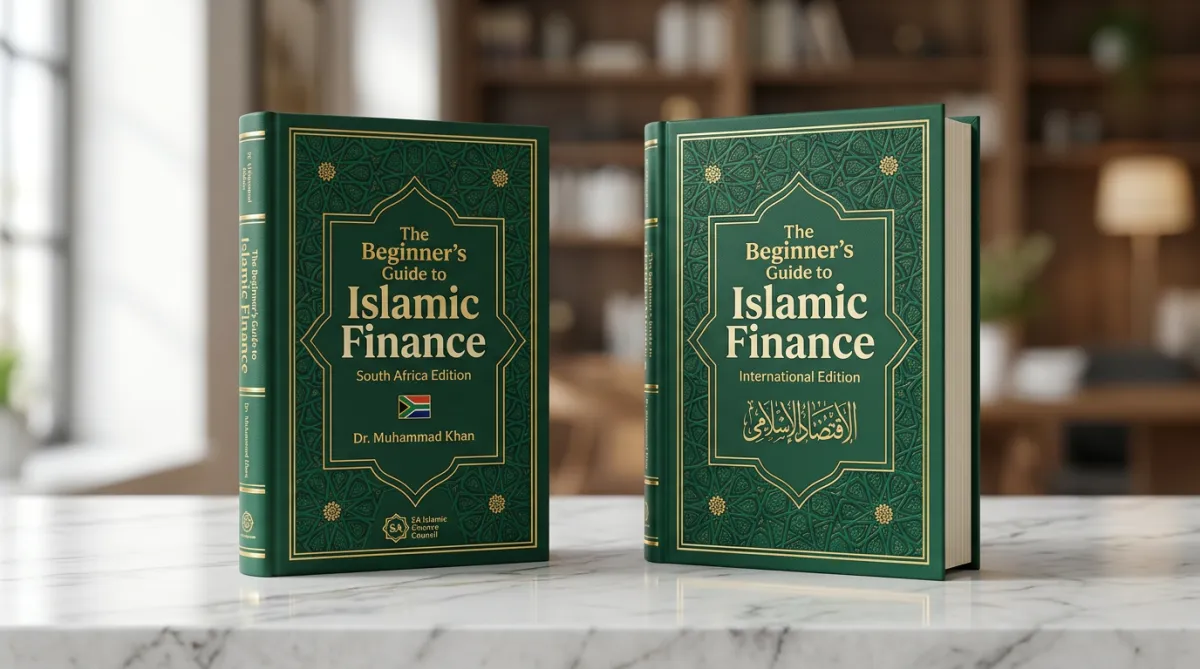
Islamic Finance Books and Learning Resources for South African Beginners
Direct answer
South African beginners should learn Islamic finance in layers: core Shariah principles, contract mechanics, local regulation and tax, then the specific product they intend to use. Start with authoritative free standards and regulator guidance, add a clear introductory book, and test every idea against the actual South African contract rather than relying on labels or social-media summaries.
Key takeaways
No single book covers Islamic jurisprudence, product engineering and South African law equally well.
Learn the difference between a sale, lease, partnership, agency and charitable contract before comparing products.
Use primary sources from AAOIFI, IFSB, FSCA, SARS and the South African Reserve Bank alongside books.
Older books can teach durable principles but may contain outdated product, tax or regulatory details.
A translated edition improves access only if terminology and examples remain accurate.
Reading supports informed questions; it does not replace personal legal, tax, financial or Shariah advice.
A beginner's learning map
Islamic finance becomes confusing when several distinct questions are collapsed into one. A useful study plan separates them:
Purpose and ethics: why riba, excessive uncertainty and prohibited activities matter.
Contracts: how Murabaha, Ijarah, Musharakah, Mudarabah, Wakalah, Salam and Istisna work.
Products: how institutions combine contracts into accounts, finance, investments and Takaful.
Governance: who reviews compliance, what standards apply and how ongoing exceptions are handled.
South African implementation: how tax, consumer law, financial regulation and estate administration affect the outcome.
Personal suitability: whether a product fits the household's goals, affordability, risk capacity and succession plan.
Reading in this order prevents two common errors: treating a conventional product with Arabic labels as automatically compliant, or rejecting a legitimate structure merely because its economic benchmark resembles a familiar market rate.
Start with authoritative, free resources
AAOIFI standards
The Accounting and Auditing Organization for Islamic Financial Institutions publishes standards covering Shariah, accounting, governance, auditing and ethics. AAOIFI has made its e-standards available online. These are technical rather than introductory, but they are valuable when a book claims that a particular contract “always” works in one way.
Do not read a single clause in isolation. Definitions, scope, exceptions and implementation guidance matter. AAOIFI is an international standard-setter; its standards do not automatically override South African law or prove that every local provider has adopted them.
Islamic Financial Services Board publications
The IFSB focuses on prudential and supervisory standards for Islamic banking, capital markets and Takaful. Its standards and publications portal is useful for readers who want to understand institutional risk, governance and industry development. Beginners can start with overview and stability publications, then move to specialised standards.
South African regulators and tax authorities
For local implementation, use the primary source that governs the question:
the FSCA regulated-entities portal for financial-sector oversight and provider checks;
the South African Reserve Bank for banking, prudential and financial-stability material;
SARS for current tax guidance, rates and interpretation material; and
the National Credit Regulator for consumer-credit information where relevant.
Regulatory status and Shariah compliance are separate. A provider can be lawfully regulated without offering a Shariah-compliant product, while a Shariah opinion does not remove South African licensing and conduct obligations.
How to choose a beginner book
Look for a clear contract-first structure
A useful introductory book should explain what parties own, exchange and promise. For every structure, it should answer:
What is the underlying asset or service?
When does ownership or risk pass?
How is profit earned?
Which obligations are fixed and which depend on performance?
What happens after late payment, damage, default or early termination?
Which element makes the transaction different from an interest-bearing loan?
A glossary is helpful, but memorising Arabic terms without tracing the cash and assets creates false confidence.
Check author and review credentials
Identify whether the author writes as a scholar, lawyer, accountant, regulator, academic or practitioner. Each perspective contributes something and has limits. Strong resources disclose references, edition dates and the standards or school of thought followed. Marketing copy, testimonials and bestseller labels are not substitutes for technical review.
Prefer examples that show both sides of the ledger
Good examples show purchase price, markup or rent, timing, ownership, fees, security and accounting consequences. They should disclose simplifying assumptions. Be cautious when a worked example compares only a profit rate and interest rate without transaction costs, tax, legal form or risk allocation.
Check the publication date
Core jurisprudential concepts can remain useful for decades, but local product names, legislation, tax rates and platform details change. Treat a book's South African regulatory or tax statement as a lead to verify, not a permanent fact. Use the latest official source before acting.
A twelve-week South African reading plan
Weeks 1–2: principles and vocabulary
Learn riba, gharar, maysir, asset backing, lawful business activity and the role of intention and substance. Build a glossary that includes differences, not merely translations. For example, record how a sale differs from a loan and how a lease differs from an instalment sale.
Use the MuslimFin Islamic finance glossary as a practical companion, then check technical definitions against recognised standards.
Weeks 3–4: sale and lease contracts
Study Murabaha, Salam, Istisna and Ijarah. Draw each transaction as a timeline: request, acquisition, possession, sale or lease, payment, default and termination. Our plain-English Murabaha guide connects the structure to South African home and asset finance.
Weeks 5–6: partnership and agency
Study Musharakah, Mudarabah and Wakalah. Focus on profit ratios, loss allocation, management authority, negligence and exit. Compare risk-sharing language with the actual guarantees and undertakings in a proposed product.
Weeks 7–8: investing and screening
Learn the difference between a permissible company, a diversified portfolio and a suitable investment. Review business-activity screens, financial ratios, purification, fees, tax, currency and concentration. The Shariah-compliant investing hub provides a South African path into these topics.
Week 9: Takaful and risk protection
Study risk pooling, participant contributions, operator roles, surplus, exclusions, claims and retakaful. Compare the actual policy wording and regulated insurer, not only a brochure. Household planning should also consider emergency funds and affordability.
Week 10: Zakah and social finance
Distinguish Zakah from tax, charitable giving and investment purification. Learn Nisab, Hawl, asset categories, liabilities and recipient eligibility. Use a current, transparent tool such as the MuslimFin Zakah calculator, then obtain scholarly guidance for complex assets.
Week 11: estates and inheritance
Islamic inheritance rules interact with South African wills, marital property, beneficiary nominations, trusts, executor processes and tax. An online result is educational, not a will. Start with the MuslimFin inheritance calculator, then coordinate legal drafting and qualified religious review.
Week 12: analyse one real product
Select a current product you might actually use. Gather the application form, mandate, terms, fee schedule, key-information document, Shariah certificate and latest factsheet. Write a one-page analysis under these headings: parties, contract, assets, cash flow, risk, total cost, regulation, Shariah governance, tax and exit. List unresolved questions before speaking to a provider.
Books versus courses, podcasts and social media
Books give sustained arguments and stable references. Courses can add sequence, exercises and feedback. Podcasts and videos make ideas accessible, while social media can alert readers to new issues. None is reliable solely because the format feels authoritative.
Use a source ladder:
legislation, regulator publications and official standards;
peer-reviewed or institutionally reviewed research;
textbooks and practitioner works with references;
provider documents for the specific product; and
commentary, videos and social posts as leads to verify.
When sources disagree, identify whether the difference is legal, empirical, contractual or jurisprudential. A regulator answers a different question from a Shariah scholar; a tax guide answers a different question from an investment factsheet.
Reading translated Islamic-finance books
Translation is valuable because people reason more confidently in languages they understand. However, specialised terms can lose legal or religious nuance. A translated resource should keep the original technical term where useful, define it consistently and distinguish translation from interpretation.
Check who translated and reviewed the edition, whether tables and links were updated, and whether local examples still make sense. Do not infer endorsement from the number of languages in which a title appears. Verify current availability, price, edition and delivery terms on the relevant retailer or publisher page rather than relying on an old announcement.
Build a personal reference system
Create a simple table with these columns:
Field | What to record |
|---|---|
Concept | Term and plain-language meaning |
Primary source | Standard, law or regulator page |
South African issue | Tax, licensing, consumer or estate implication |
Product evidence | Contract clause, factsheet or certificate |
Open question | What still needs professional advice |
Review date | When the source was last checked |
Save the exact edition or URL. Record notes in your own words and separate quotations from your interpretation. For changing material, set an annual review reminder.
Common beginner traps
assuming every “Islamic” account uses the same contract;
treating Arabic terminology as proof of substance;
relying on a scholar's general lecture for a contract the scholar has not reviewed;
using overseas tax or estate guidance as if it applies in South Africa;
confusing Shariah compliance with low risk or good performance;
buying a product before reading fees, exclusions and exit terms;
using an old edition for current tax thresholds or regulation;
treating one school or standard as universally adopted; and
collecting resources without analysing a real decision.
Frequently asked questions
What is the best first Islamic finance book?
Choose a recent, referenced introduction that explains contracts and cash flows in plain language. Pair it with official standards and South African regulator guidance; no single title is sufficient for every decision.
Are AAOIFI standards free to read?
AAOIFI has announced complimentary online access to its standards through its e-standards portal. Check the official site for the current versions and languages.
Can I learn Islamic finance only from YouTube?
Video can introduce concepts, but it rarely supplies the complete contract, source trail or South African legal context. Use it as a starting point and verify material claims.
Do Islamic finance books give personal rulings?
No. A general explanation cannot account for your exact agreement, scholarly approach, tax position, goals or risks. Seek qualified advice for consequential decisions.
Does MuslimFin offer educational resources?
Yes. MuslimFin publishes South African guides, calculators and service information. Availability and scope change, so use the resources page for current material.
Next step
Choose one real decision—an investment, home-finance proposal, Takaful policy or business-funding need—and follow the twelve-week path with that decision in view. Explore MuslimFin resources, then contact MuslimFin when you need help turning learning into a coordinated South African plan.
Disclaimer
Important: This educational guide is not personal financial, legal, tax or Shariah advice and does not endorse a named book, retailer, course or product. Availability, editions, laws, standards and provider terms change. Verify current primary sources and obtain advice appropriate to your circumstances.