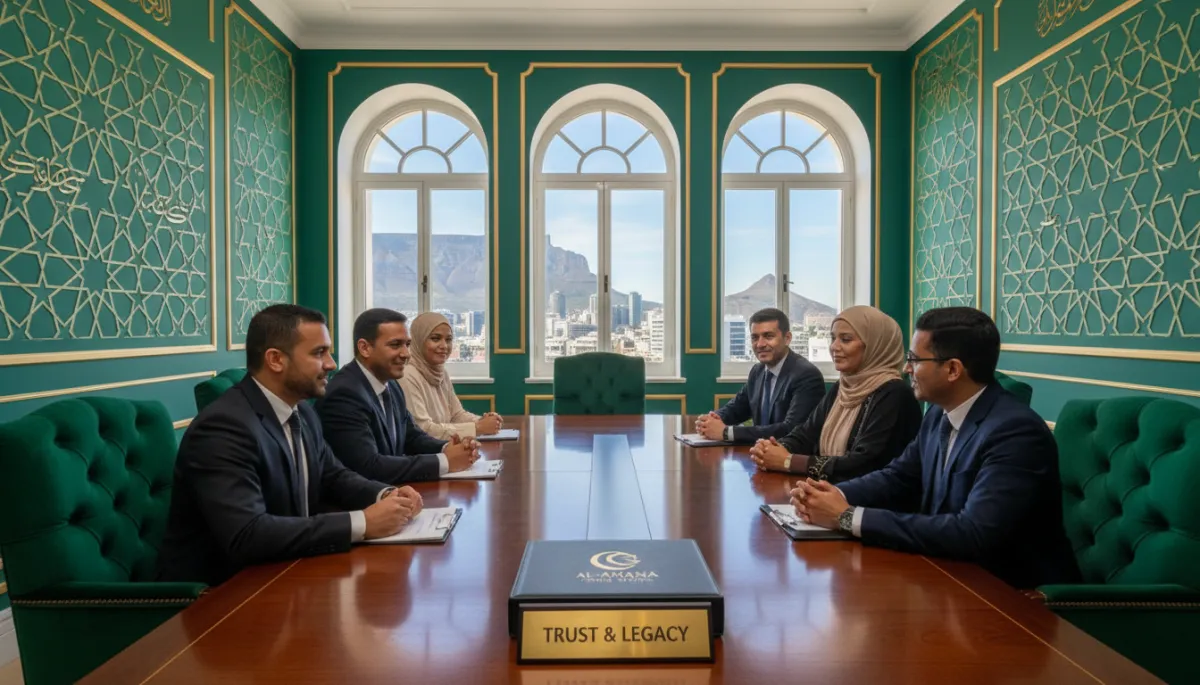
Muslim Family Office in South Africa: Services and Fit
What is a Muslim family office?
A Muslim family office coordinates connected financial decisions around a family's objectives and Islamic values. Its work may connect investments, property, business interests, risk protection, trusts, succession and charitable intentions. The useful distinction is coordination across these areas, not an assumption that one organisation personally performs every regulated or professional service.
The term family office is not itself proof of a financial-services licence, legal qualification, trustee appointment or Shariah certification. When choosing assistance in South Africa, verify the people, entities and written scope behind the label. A practical arrangement should make responsibilities easier to understand, not obscure them.
When does coordinated planning become useful?
Complexity is a better starting point than an arbitrary wealth threshold. A household with a business, dependants, several properties and a trust may have connected problems even if no single account is exceptionally large. Conversely, someone with straightforward goals and a small number of uncomplicated assets may not need a broad family-office engagement.
Look for decisions that affect more than one area. A property purchase can change household liquidity, finance exposure and estate planning. A business succession agreement can affect ownership, protection needs and the family inheritance plan. An investment held in a trust requires attention to authority, mandate, records and beneficiaries, not just performance.
Coordination is useful when separate advisers work from inconsistent facts or no one owns the follow-through. It does not mean dismissing existing professionals. A clear coordinator can help the attorney, accountant, investment adviser and relevant Shariah reviewer work from an agreed fact set while each retains responsibility for their own work.
What work should the service cover?
A connected view of assets and commitments
Start with who owns each asset, who owes each liability and who depends on the household. Personal, company and trust assets must not be treated as one freely interchangeable pool. Record liquidity needs, guarantees, finance commitments and the purpose of each major investment.
Investment and risk decisions
Investment planning should connect goals, access needs, capacity for loss, costs and a documented Shariah-review process. Protection discussions should identify the actual need and locally available cover, with exclusions and claim conditions. Neither the word halal nor a product illustration guarantees investment performance or a claim payout.
Property and business coordination
A property decision can require origination support, provider assessment, conveyancing, tax review and ongoing management. A business decision can require company-law, valuation and succession expertise. Identify the responsible provider for each service rather than assuming the family-office engagement automatically includes it.
Trusts, wills and succession
Review the will, trust documents, beneficiary nominations and business agreements together. The attorney handles legal drafting within the agreed instruction; an executor or trustee needs the appropriate appointment and authority. Qualified Shariah input addresses the defined Islamic questions. Coordination does not replace any of these roles.
How do you find a Shariah-conscious financial adviser in South Africa?
Begin with the legal name of the service provider and the individual who will advise you. Where regulated financial advice or intermediary services are involved, use the FSCA's regulated-people and entities resources to check the relevant authorisation. Ask which product categories and services are permitted, and which entity will appear on your agreement.
Regulatory status and Shariah expertise are separate checks. Ask how Islamic questions are reviewed, who is responsible, what methodology is followed and what written evidence you will receive. A general financial qualification does not itself establish specialist Shariah authority; a religious opinion does not replace regulatory authorisation for financial advice.
Check experience relevant to your actual problem rather than relying on a broad claim to handle everything. A family business with offshore assets may need a different professional team from a salaried household starting an investment plan. Request a clear explanation of referrals and third-party involvement.
Questions to ask before appointing anyone
What exact work is included, and what is excluded?
Who provides regulated advice, legal drafting, tax work and Shariah review?
What fees, commissions or referral arrangements may apply?
Which providers or products can be considered, and what restrictions exist?
Who holds the assets and who has transaction authority?
How are conflicts, complaints and cancellation handled?
What records, reports and completed actions will I receive?
How will personal and financial information be protected?
Obtain these answers in writing. A promise of a comprehensive service is difficult to assess without deliverables, owners and deadlines. Do not grant access to accounts or share passwords simply because an adviser is coordinating the work.
What a useful first engagement looks like
Choose a limited, meaningful starting problem. For example, the family may need to reconcile its ownership records with the will, understand investment costs, or prepare for a property-finance assessment. Agree the evidence required and the professionals who must review the result.
Then create an action register with a responsible person, due date and completion evidence for each item. A discussion about a will is not an executed will. A recommendation to update a nomination is not a provider-acknowledged change. Good coordination distinguishes proposed, instructed and completed work.
Use our first family-office meeting guide for the detailed preparation checklist. This avoids repeating the same information across several appointments and helps keep the initial discussion focused.
How MuslimFin Family Office fits
MuslimFin's family-office approach is to connect the household's financial and Islamic planning questions and help organise the appropriate next steps. The actual engagement, responsible legal entities, professional appointments and service boundaries must be confirmed in writing. Do not assume MuslimFin is automatically your attorney, executor, trustee, tax practitioner or the provider of every product discussed.
Start with the area that needs attention: halal portfolio planning, Takaful questions, home-finance origination or estate planning. These guides explain the decisions without promising acceptance, investment returns or a tax outcome.
Contact MuslimFin with the decision you need help organising. Agree the scope and any fees before supplying detailed records. Use a verified secure channel for sensitive documents; never send login credentials.
Editorial update: 26 September 2026. General educational information about service selection and coordination, not a personal investment, legal, tax or Shariah recommendation.


