What is Ijarah? Islamic Leasing Explained for South Africans
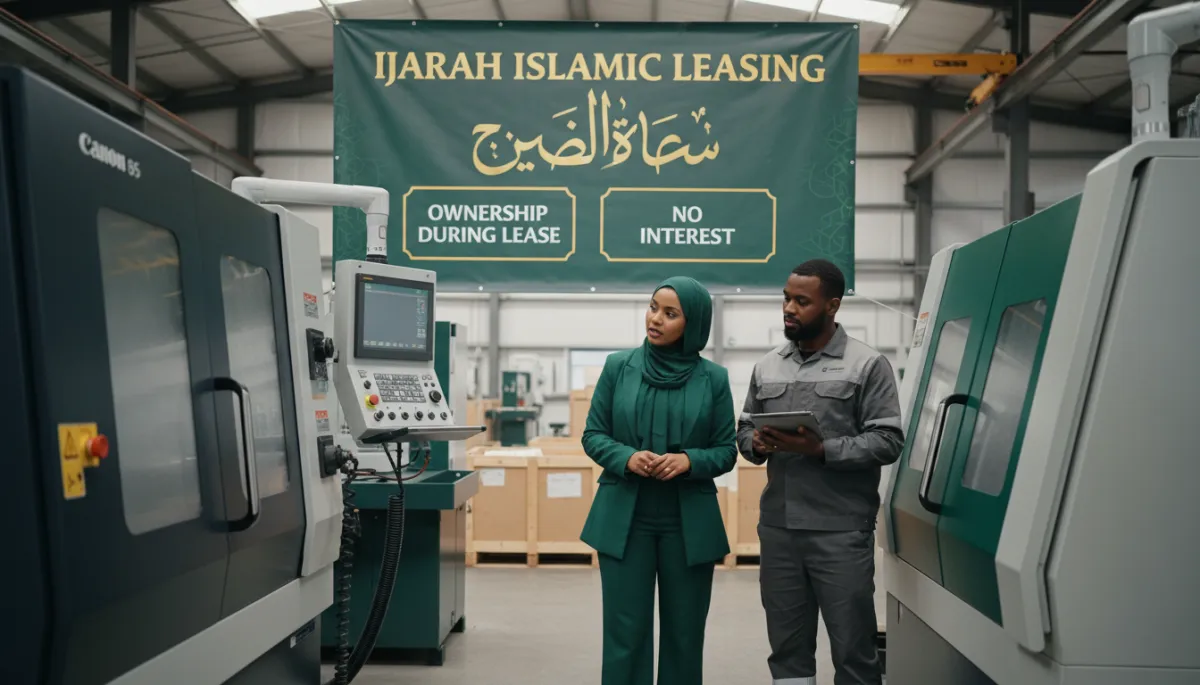
Ijarah is one of the oldest and most widely used contracts in Islamic finance. The word comes from the Arabic ajara — to lease or hire. In a financial context, ijarah is an Islamic lease arrangement where the owner of an asset rents it to a user for an agreed period, at an agreed rental, without any element of interest. It is used extensively in South Africa for vehicle finance, equipment finance, and commercial property — and it is one of the clearest examples of how Islamic finance replaces riba with genuine economic activity.
The Simple Definition
Ijarah is a lease. The bank (or financier) owns an asset and rents it to you. You pay rent for the right to use the asset. The bank earns rental income — not interest. At the end of the lease, the asset may be transferred to you through a separate gift or sale agreement, or returned to the bank.
The key difference from a conventional hire purchase: in a conventional hire purchase or finance lease, the “rent” is effectively the repayment of a loan with interest. In ijarah, the bank genuinely owns the asset and bears the risks that come with ownership — which is what justifies the rental income under Islamic law.
The Shariah Basis for Ijarah
Ijarah is well-established in Islamic jurisprudence. The principle is that the owner of an asset has the right to charge for its use — exactly as a landlord charges rent for a property. The return is compensation for providing access to a real, tangible benefit (the use of the asset), not for the passage of time on a loan. This is the fundamental distinction between permissible rental income and impermissible interest.
Types of Ijarah Used in South Africa
Operating Ijarah (Pure Lease)
A straightforward lease with no intention of ownership transfer. The bank owns the asset throughout the lease period. At the end of the term, the asset is returned to the bank. This is used for shorter-term asset use where you do not need to own the asset.
Ijarah Muntahia Bittamleek (Lease Ending in Ownership)
The most common form in South Africa. The bank owns the asset during the lease period and transfers ownership to you at the end of the lease term — either through a gift (hiba) or a separate nominal sale at a pre-agreed price. The key requirement: the rental agreement and the ownership transfer must be separate documents; they cannot be conditional on each other within the same contract (which would make the rental commercially a loan repayment). This is the structure most commonly used for vehicle finance and equipment finance.
Ijarah vs Conventional Hire Purchase: Key Differences
| Feature | Conventional HP/Finance Lease | Ijarah |
|---|---|---|
| Who owns the asset? | Notionally the finance company, practically the user | The bank (genuinely) throughout the lease |
| Payment nature | Loan repayment + interest | Rental for use of the asset |
| Risk of ownership | Borne entirely by the user | Borne by the bank (it owns the asset) |
| If asset is destroyed? | User still owes the full loan | Major damage/destruction is the bank’s risk as owner |
| Shariah status | Not permissible (riba) | Permissible (rental of a real asset) |
Where Ijarah Is Used in South Africa
Vehicle Finance
Ijarah is widely used for Islamic vehicle finance in South Africa. The bank purchases the vehicle and leases it to you. Your monthly payment is rent, not a loan repayment with interest. At the end of the term, ownership is transferred. Read our complete guide on Shariah-compliant car finance in South Africa.
Equipment and Business Asset Finance
Business machinery, computers, office equipment, and industrial assets are commonly financed through ijarah for South African Muslim businesses. The bank purchases the equipment and leases it to the business. Read our guide on Shariah-compliant business funding.
Commercial Property
Some commercial property finance in South Africa uses an ijarah structure, particularly for shorter-term arrangements or where diminishing musharaka is not appropriate. The bank owns the property and leases it to the business, with a separate arrangement for eventual ownership transfer.
Ijarah and Maintenance Obligations
In a genuine ijarah, the bank as owner bears the major maintenance obligations — structural repairs, major replacements. The lessee (you) bears the routine usage costs and day-to-day maintenance. In practice, many South African Islamic finance arrangements transfer most maintenance responsibilities to the lessee by agreement — which is permissible provided the major ownership risks remain with the bank.
Ijarah and Takaful
Because the bank owns the asset during the lease period, the asset should be insured by the bank — through a Shariah-compliant takaful policy. Many South African Islamic finance arrangements include a takaful component for the financed asset. Read our guide on takaful in South Africa.
Understanding the Contract Before You Sign
When presented with an Islamic asset finance contract, ask these questions: Does the bank actually take ownership of the asset? Is the rental amount fixed or variable? What happens to the maintenance obligations? How does ownership transfer at the end — and is it a separate document from the lease? A Shariah-compliant financial advisor can review any finance contract before you sign to confirm it meets the ijarah requirements. Our team at MuslimFin helps South African Muslims evaluate and structure asset finance correctly. Book a consultation.
Book Your Islamic Finance Consultation →


