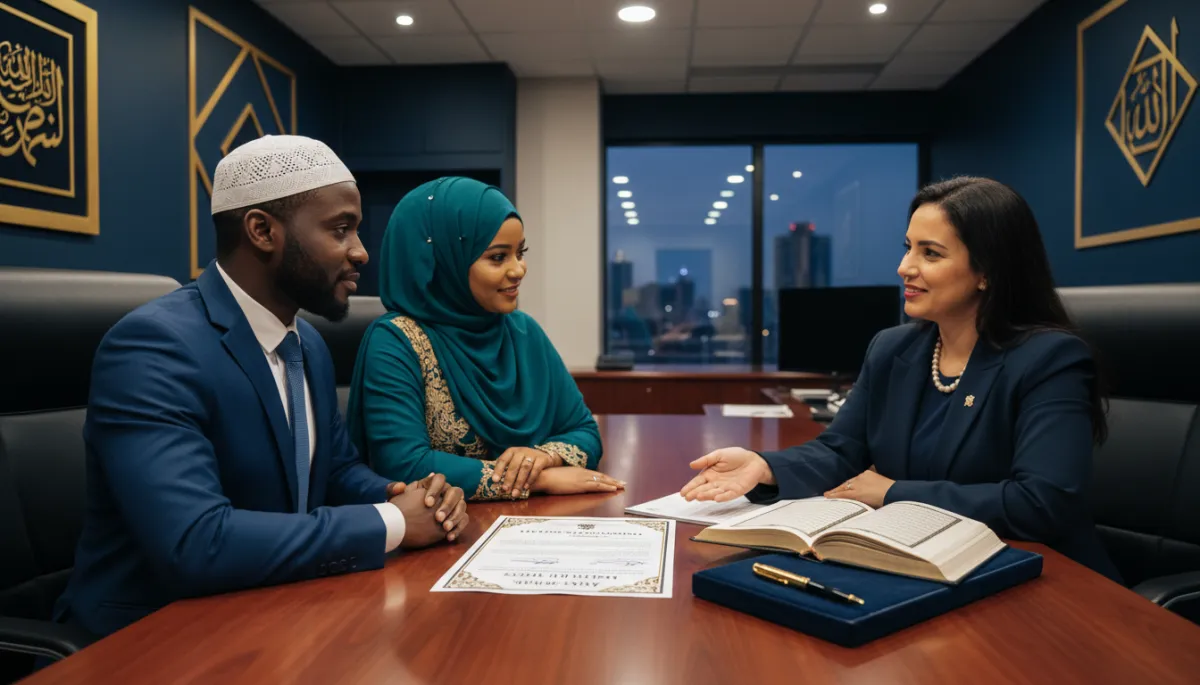
Islamic Wills in South Africa: The Complete Guide to Writing a Shariah-Compliant Will
Why This Guide Exists
Every year, Muslim families in South Africa go through estate administration where the deceased had no valid Islamic will. The result is almost always the same: the estate is distributed under the Intestate Succession Act, the faraid shares are not applied, and the family either disputes the outcome or accepts a distribution that contradicts Islamic law.
This guide covers everything South African Muslims need to know about Islamic wills — what they are, what the law requires, how they work alongside faraid, and what happens when you get it right.
The Single Document Every South African Muslim Needs
A common misconception is that a nikah certificate is a form of estate planning. It is not. Another misconception is that an Islamic will and a South African legal will are two separate documents. They should not be.
A properly drafted Islamic will for a South African Muslim is a single document that:
- Meets all formal requirements of the Wills Act 7 of 1953 — making it legally valid in a South African court
- Directs the estate to be distributed according to the principles of Islamic inheritance law (faraid)
When both elements are present, you have one document that works simultaneously in the South African legal system and according to your Islamic faith. When either element is missing, you have a problem.
What Makes a Will Valid Under South African Law?
The Wills Act 7 of 1953 sets out the formal requirements for a valid will in South Africa. Miss any of these and the Master of the High Court may reject the document:
- In writing: Handwritten or typed — both are acceptable.
- Signed by the testator: You must sign at the end of the will. Each page should also be initialled.
- Two competent witnesses: Both witnesses must be present simultaneously when the testator signs. They must also sign in the testator's presence and in each other's presence.
- Witnesses cannot be beneficiaries: A witness who is also a beneficiary — or who is married to a beneficiary — forfeits their bequest. This is one of the most common errors in home-drafted wills.
- Age and capacity: The testator must be 16 years or older and must have testamentary capacity at the time of signing.
There is no requirement for a notary or registration with any authority for a will to be valid. But the document must be lodged with the Master of the High Court after the testator's death.
What Makes a Will Islamic?
A will becomes an Islamic will when it contains clear, unambiguous instructions that the estate is to be distributed according to Islamic inheritance principles — faraid. The following elements are essential:
1. A direction to apply faraid
The will must state explicitly that the net estate is to be distributed in accordance with the Islamic law of succession (faraid) as prescribed by the Quran and Sunnah. A vague reference to Islamic principles is insufficient — the executor needs a clear mandate.
2. A reference to a Shariah authority
In South Africa, the executor of an Islamic will typically refers the faraid calculation to a recognised body such as the Muslim Judicial Council (MJC). The will should name this authority or specify which body's ruling governs in the event of any dispute.
3. A Shariah-competent executor
The executor you appoint must either understand faraid themselves or must commit to referring the calculation to a recognised Shariah authority and distributing according to that calculation. An executor who distributes the estate under South African intestate law — even with good intentions — defeats the purpose of the Islamic will.
4. The Wasiyyah bequest (if any)
If you wish to use your discretionary one-third bequest, this must be stated clearly and must fall within the one-third limit of the net estate. Any amount exceeding one-third requires the consent of all heirs to take effect.
Faraid and Your Islamic Will — How They Work Together
The Islamic will does not replace faraid — it gives effect to it in the South African legal context. Understanding the relationship between the two is essential.
What faraid does
Faraid is the Quranic system of mandatory inheritance shares. It determines who inherits, in what proportions, and in what order of priority. The Quran (4:11–12, 4:176) sets out the fixed shares for wives, daughters, sons, parents, and other heirs. These shares cannot be altered by any will.
What the will does
The will is the instruction manual for the executor. It tells the executor: this estate must be distributed by faraid, this is the authority that calculates it, and here is what I am giving from my discretionary one-third. Without the will, the executor defaults to South African intestate law. With the will, the executor is legally directed to apply faraid.
The one-third bequest rule
Islam allows the testator to bequest up to one-third of the net estate (after debts and funeral costs) to non-heirs. This is the only part of the estate where the testator has full discretion. The remaining two-thirds or more is distributed by faraid to the rightful heirs.
Common uses of the one-third bequest in South Africa:
- Charitable contributions — a mosque, an Islamic school, a waqf endowment
- A bequest to a stepchild who is not a faraid heir
- A bequest to a non-Muslim family member
- Directing a specific asset (such as the family home) to a particular beneficiary, subject to faraid obligations being met from other assets
Who Are Your Heirs Under Faraid?
Faraid recognises specific categories of heirs. The most common South African Muslim family scenarios:
Surviving spouse and children
The wife (or wives in a polygamous marriage) receives one-eighth of the net estate. The children receive the remainder in the 2:1 son-to-daughter ratio. If there are no sons, daughters receive two-thirds collectively (or one-half if only one daughter survives). Parents and siblings may also inherit portions depending on who is alive at the time of death.
Surviving spouse, no children
The wife receives one-quarter of the net estate. Parents, siblings, and other relatives receive the remainder in faraid priority order.
Children only (spouse predeceased)
Sons and daughters divide the estate in the 2:1 ratio. Other relatives inherit according to faraid priority.
The full faraid calculation for your specific family structure requires professional guidance. Read the Complete Guide to Islamic Inheritance in South Africa to understand the framework, and the specific guides on daughters' inheritance, wives' inheritance rights, and polygamous marriages and Islamic inheritance.
What Happens Without an Islamic Will?
When a Muslim dies without a valid will, South African law applies the Intestate Succession Act 81 of 1987. The consequences for most Muslim families are significant:
- Daughters and sons inherit equally — contradicting the faraid 2:1 rule
- The surviving spouse may receive more than faraid would prescribe, at the expense of other heirs
- Extended family heirs — parents and siblings — may receive more or less than faraid entitles them to
- No charitable bequests are made — your sadaqah jariyah plans are unfulfilled
- No guardian of your choice is appointed for minor children
- No executor of your choice — the Master appoints one
A Muslim family that wants faraid applied has no legal recourse without a valid Islamic will. Read more on what happens when a Muslim dies without a will in South Africa.
Choosing the Right Executor
The executor administers your estate after your death. In South Africa, an executor must be appointed by the Master of the High Court. You can — and should — nominate your executor in your will.
For an Islamic will, your executor needs one of two things:
- Personal knowledge of Islamic inheritance law (faraid) and how to apply it in a South African legal context
- A commitment to refer the faraid calculation to a recognised Shariah authority and to distribute according to that calculation
Name your executor explicitly and make sure they understand what they are being asked to do. Also name an alternate executor in case your primary choice predeceases you or is unable to serve.
Trusts, Minors, and Your Islamic Will
If you have minor children, your Islamic will should address what happens to their inheritance. Under South African law, assets inherited by minors are paid into the Guardian's Fund (administered by the Master of the High Court) until the child turns 18. This is often not what parents intend.
The will can instead direct that minor children's shares be held in a testamentary trust — a trust that comes into existence on your death — managed by trustees you name and subject to conditions you set. A testamentary trust established by an Islamic will can be structured to invest Islamically and distribute at an age the parents choose.
Read the dedicated guide on trusts and Islamic inheritance in South Africa for more detail.
Common Mistakes in Islamic Wills
These are the errors Muslim families encounter most often:
A will that fails the Wills Act formalities
A beautifully written Islamic will that was signed by only one witness, or where a beneficiary witnessed the signing, is legally invalid. The Master treats the deceased as having died intestate. The Intestate Succession Act applies, not faraid.
No faraid direction
A will that distributes the estate equally among children (or in any non-faraid proportion) is legally valid but Islamically non-compliant. This happens when the drafter does not know the faraid rules or assumes equal distribution is Islamic.
Witnesses who are beneficiaries
Under the Wills Act, a beneficiary who is also a witness forfeits their bequest. They do not inherit from the will — though the rest of the will remains valid.
An outdated will
A will drafted before the birth of children, before the death of a parent, or before a significant change in assets may no longer reflect the correct faraid distribution or the testator's current wishes. Review regularly.
Two conflicting documents
Some families have a South African will drafted by an attorney and a separate Islamic will document. If these conflict, litigation is likely. One document that satisfies both the Wills Act and Islamic requirements is the right approach.
Your Will and the Rest of Your Estate
An Islamic will governs the distribution of your estate — but not all your assets form part of your estate. Two significant asset classes fall outside your will entirely:
Retirement fund death benefits
Pension funds, provident funds, and retirement annuities are governed by the Pension Funds Act. Fund trustees distribute these benefits at their discretion, primarily to dependants. Your will does not bind them. Read the retirement funds and Islamic inheritance guide.
Life insurance paid to named beneficiaries
Life insurance proceeds paid to a nominated beneficiary bypass your estate entirely. They are not subject to your will and are not distributed by your executor. Read the life insurance and Islamic inheritance guide to understand your planning options.
A complete Islamic estate plan addresses all three layers — your will, your retirement fund nominations, and your life insurance nominations — ensuring they work together toward faraid-compliant outcomes. Read the Islamic Estate Planning guide for the full picture.
When Should You Draft or Update Your Will?
The Prophet (SAW) said not to let two nights pass without a will. In practical terms for South African Muslims:
- Draft your will as soon as you have any assets, a spouse, children, or dependants — regardless of your age
- Review after any major life event: marriage, birth of a child, death of a parent or sibling (which changes faraid shares), divorce, or significant change in assets
- Review at minimum every three years even if nothing major has changed
Islamic Wills for Non-Standard Family Structures
Not all South African Muslim families fit the standard married couple with children model. Islamic wills must address more complex structures:
- Polygamous families: All wives and their children must be named explicitly and their faraid entitlements addressed. Read the guide on polygamous marriages and Islamic inheritance.
- Families with no children: Faraid distribution is very different — parents and siblings take larger shares. A will is essential to ensure the correct relatives inherit.
- Blended families: Stepchildren are not faraid heirs. If you wish to provide for a stepchild, you must use your one-third bequest explicitly.
- Community of property marriages: The marital regime fundamentally changes what forms part of the estate in the first place. Read the community of property and Islamic inheritance guide.
- Disabled heirs: A testamentary trust can protect a disabled heir's inheritance while preserving their access to social grants.
Get Your Islamic Will Drafted Correctly
There is no shortcut to a correctly drafted Islamic will. A template from the internet will not account for your specific family structure, the faraid calculation for your heirs, the South African tax implications, or the Wills Act formalities. It will also not be reviewed by a Shariah authority.
MuslimFin Family Office works with South African Muslim families to draft Wasiyyahs that are legally valid under the Wills Act and correctly structured for faraid. We coordinate between qualified Shariah scholars, estate planners, and South African legal professionals to give you a single document that works on both dimensions.
Use the Islamic Inheritance Calculator to model your faraid distribution first. Then book a confidential consultation to have your will drafted correctly.
Book your consultation: https://muslimfin.co.za/calendar-ali
Last reviewed: August 2026


