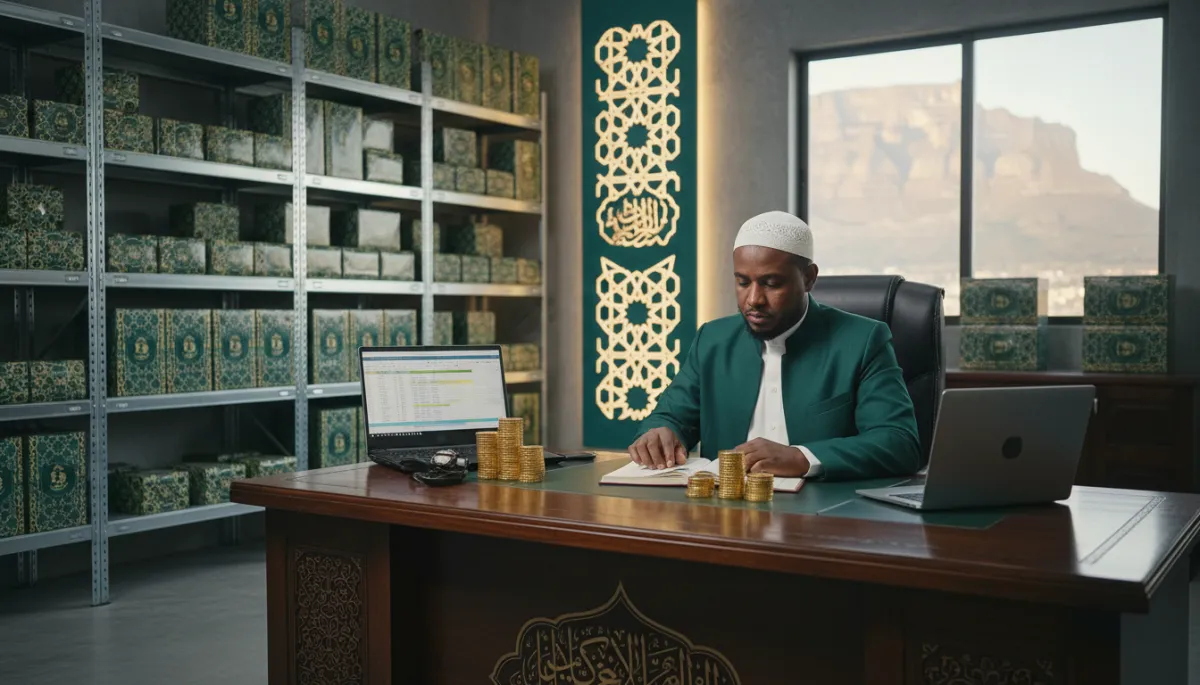
Zakah on Business Assets and Trade Goods in South Africa
Zakah on a business is one of the most commonly overlooked Islamic financial obligations in South Africa. Many Muslim business owners pay personal zakah on their savings and gold but forget — or do not know — that their business itself generates zakatable wealth. This guide explains exactly what business assets are zakatable, how to calculate it, and the mistakes that cause Muslim business owners to underpay or overpay.
The Principle: Zakah on Trade
The obligation of zakah on trade (zakah al-tijarah) is one of the clearest in Islamic law. When the Prophet Muhammad (peace be upon him) legislated zakah, trade goods were among the original categories. The principle: if you hold goods or assets for the purpose of trade or sale, and those goods have been held for a full lunar year while their value exceeds the nisab threshold, zakah is due at 2.5%.
This applies to South African Muslim business owners regardless of business structure — sole proprietor, partnership, close corporation, or company.
What IS Zakatable in a Business
1. Inventory (Trade Goods)
The core zakatable asset in any trading business is your inventory — the goods you hold for sale. This includes:
- Finished goods held for sale
- Work in progress (at its current realisable value)
- Raw materials purchased for the purpose of producing goods for sale
Inventory is valued at its current market value (the price you could sell it for today), not its cost price.
2. Cash and Bank Balances
All cash in the business — in the bank, in the till, in a safe — is zakatable. This includes both your business current account and any savings held in the business name.
3. Trade Receivables (Debtors)
Money owed to your business by customers (trade debtors) is zakatable, to the extent it is collectable. If a debt is doubtful or bad, it is generally excluded from your zakah calculation until recovered.
4. Short-Term Investments
Any short-term investments made by the business from surplus cash — in Shariah-compliant instruments — are zakatable.
What is NOT Zakatable in a Business
Fixed assets used in the operation of the business are generally not zakatable — they are not held for trade, but for productive use:
- Business premises (property used to operate the business)
- Machinery, equipment, and tools
- Business vehicles (used to operate the business, not held for sale)
- Office furniture and computers
The distinction is clear: assets held for use in the business are not zakatable; assets held for trade or sale are.
Exception: if you are in the business of buying and selling property, vehicles, or equipment (i.e. these are your stock-in-trade), they ARE zakatable as inventory.
How to Calculate Business Zakah: A Simple Framework
At your zakah anniversary date (the same lunar date each year), calculate:
- Zakatable assets = inventory (at market value) + cash + trade receivables (collectable) + short-term investments
- Less: zakah-deductible liabilities = short-term business debts due within the year (trade creditors, short-term loans). Note: long-term debts are generally not deducted in full
- Net zakatable business wealth = zakatable assets minus deductible liabilities
- Zakah due = 2.5% of net zakatable business wealth (if above nisab and held for a full year)
Add this to your personal zakah calculation (on your personal savings, gold, investments, and other assets) to get your total zakah for the year.
Who Pays the Zakah: The Business or the Owner?
For a sole proprietor or partnership, the business is not a separate legal person for zakah purposes — the owner pays zakah on the business assets as part of their personal zakah. For a company (Pty Ltd), the position is more nuanced. Many scholars hold that the shareholders should include their proportionate share of the company’s zakatable assets in their personal zakah calculation. This is a specialist question — consult a Shariah-qualified advisor for your specific business structure.
Common Mistakes South African Muslim Business Owners Make
- Only paying zakah on personal savings, not on the business — the most common oversight. Your business wealth is your wealth
- Deducting all business debts — only short-term liabilities (due within the year) are generally deductible; long-term loans are not deducted in full
- Valuing inventory at cost — inventory should be valued at current market value (what you can sell it for), not what you paid for it
- Forgetting trade receivables — money your customers owe you is your wealth and is zakatable
- Not having a consistent zakah date — pick a lunar date and stick to it every year. Inconsistent dates create gaps in your zakah obligation
Zakah and Your Business Estate Plan
Your business assets form part of your estate on your death, and they must be valued and distributed according to Islamic faraid. For Muslim business owners, coordinating your zakah, your estate plan, and your business succession plan is essential. Read our guides on Islamic inheritance for business owners and zakah calculation in South Africa. Use our Islamic Inheritance Calculator to see how your business assets would be distributed.
Get Your Business Zakah Right
Business zakah is complex enough that most Muslim business owners benefit from professional guidance — to identify all zakatable assets, apply the correct methodology for your business structure, and calculate the right amount. Our team at MuslimFin works with South African Muslim business owners on their complete financial obligations — zakah, inheritance planning, and business succession. Book a consultation to get your zakah right.
Book Your Zakah & Business Finance Consultation →


