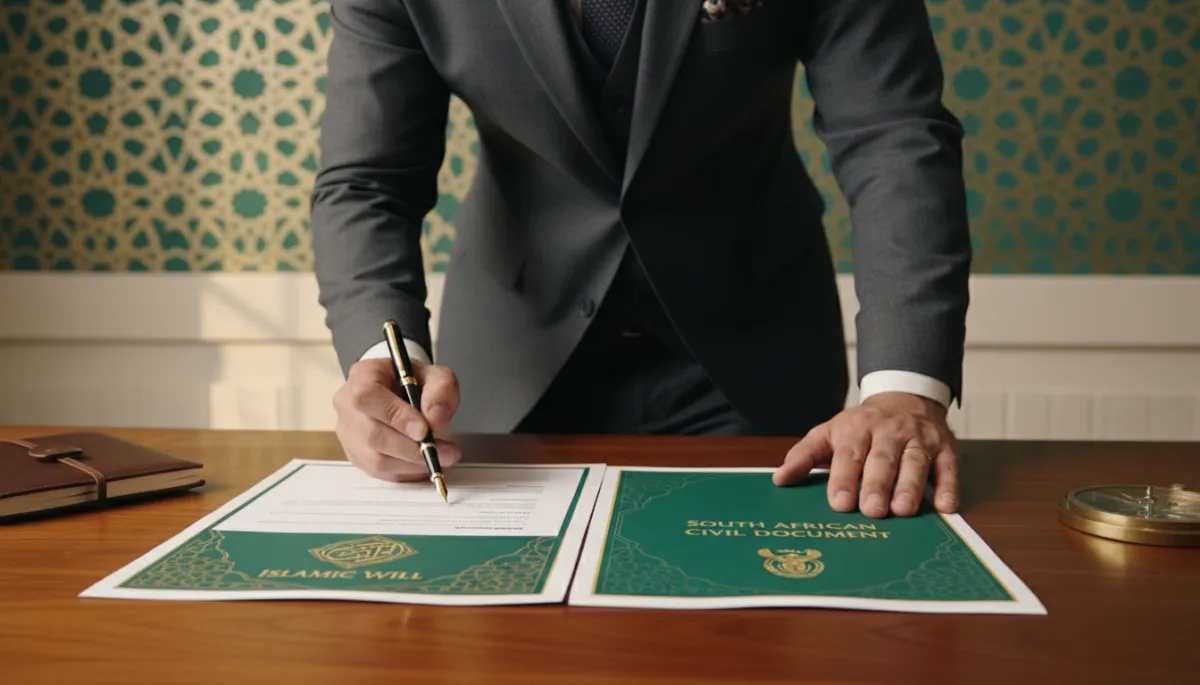
How to Write an Islamic Will in South Africa: A Step-by-Step Guide
Most South African Muslims do not have an Islamic will. Some have a conventional will drafted by an attorney. Many have nothing at all.
When a Muslim dies without a properly structured Islamic will, their estate is distributed under South African law — not under Islamic inheritance law. The result can be a distribution that contradicts the precise allocations set by the Quran and Sunnah, and family conflict that lasts for years.
This guide walks through the steps to writing an Islamic will in South Africa — what it must include, what it cannot do, and how to ensure it is both Shariah-compliant and legally valid.
Why Every South African Muslim Needs an Islamic Will
If you die without a valid will in South Africa, the Intestate Succession Act applies. It distributes your estate to your spouse and children in proportions defined by South African law — not by Islamic inheritance law. The difference can be significant, particularly regarding the shares allocated to daughters, sons, wives, and parents under mīrāth versus civil law.
Even with a conventional will, if it was not drafted with Islamic inheritance principles in mind, it may not correctly reflect the mīrāth formula. An Islamic will (wasiyyah) that is also legally valid under South African law gives you both Shariah compliance and legal enforceability.
What Is a Wasiyyah?
A wasiyyah is an Islamic testamentary document — a written statement of your wishes for how your estate should be managed and distributed after your death, within the limits set by Islamic law.
The wasiyyah operates within clear boundaries:
- It cannot override the Islamic inheritance formula — the mīrāth allocations are non-negotiable
- It can allocate up to one-third of the net estate to non-heirs (charities, specific individuals who are not Quranic heirs, a Waqf)
- Bequests to Quranic heirs through the wasiyyah require the consent of all other heirs
What an Islamic Will in South Africa Must Cover
A complete Islamic will for a South African Muslim should address:
- Declaration of faith: Confirmation that you are Muslim and wish your estate administered in accordance with Islamic law
- Appointment of executor: Who will administer the estate — ideally someone with knowledge of Islamic inheritance law and South African estate administration
- Appointment of guardian: If you have minor children, who will care for them?
- Funeral instructions: Islamic burial rites; no cremation; preference for burial location
- Payment of debts: Instruction to settle all outstanding debts from the estate before distribution
- Zakah arrears: If any Zakah was unpaid during your lifetime, instruction to calculate and settle it from the estate
- Inheritance distribution: Reference to the Islamic inheritance formula and instruction that the net estate be distributed accordingly after debts and wasiyyah bequests
- Wasiyyah bequests: Specific bequests to non-heirs — charities, a Waqf, grandchildren who may not inherit automatically, or others who are not Quranic heirs — up to one-third of the net estate
- Asset schedule: A list of assets attached as a schedule — accounts, property, investments, retirement funds, business interests
Step-by-Step: Writing Your Islamic Will
Step 1: Take Stock of Your Assets and Debts
Before writing a word, list everything you own and owe:
- Property (primary residence, investment property)
- Bank accounts and cash
- Investments (shares, unit trusts, ETFs)
- Retirement funds (pension, provident, RA)
- Life Takaful or life insurance policies
- Business interests and partnerships
- Vehicles, jewellery, and valuables
- Money owed to you by others
- Debts: home loan, vehicle finance, credit cards, any personal obligations
Step 2: Identify Your Quranic Heirs
Islamic inheritance law defines a specific set of heirs and their prescribed shares. For a typical South African Muslim family, the main categories are:
- Wife: One-eighth of the estate if there are children; one-quarter if there are none. (Multiple wives share the wife's prescribed portion collectively.)
- Husband: One-quarter of the estate if there are children; one-half if there are none
- Sons and daughters: Among the residuary heirs, a son receives twice the share of a daughter
- Father and mother: Each parent typically receives one-sixth of the estate where the deceased has children
The precise calculation depends on exactly who has survived the deceased. An Islamic scholar or qualified Islamic estate planner should calculate the exact shares for your specific family structure.
Step 3: Decide on Your Wasiyyah Bequests
You may bequeath up to one-third of your net estate (after debts are settled) to non-heirs. Common wasiyyah bequests:
- Charitable organisations
- A Waqf fund or endowment
- Grandchildren (who do not automatically inherit if their parent predeceased you)
- A step-child who is not a Quranic heir
- A non-Muslim relative or close friend
If you make no wasiyyah bequests, the full net estate passes to the Quranic heirs in their prescribed shares.
Step 4: Appoint the Right Executor
The executor administers your estate — collects assets, pays debts, and distributes to heirs. In South Africa, the executor is subject to the Administration of Estates Act and must be approved by the Master of the High Court.
Choose an executor who understands Islamic inheritance law, is familiar with South African estate administration requirements, and is trustworthy and available. Appointing a Shariah-compliant attorney or Islamic financial planner as co-executor ensures the Islamic dimensions are correctly handled alongside the legal process.
Step 5: Draft and Sign the Will Correctly
To be legally valid under the Wills Act 7 of 1953, the will must:
- Be in writing
- Be signed at the end by the testator (the person making the will)
- Have each page initialled by the testator
- Be signed in the presence of two competent witnesses who are both present at the same time
- Have witnesses who sign and initial in the presence of the testator and each other
- Have witnesses who are over 14 years of age and are not beneficiaries under the will
A will that does not meet these requirements may be declared invalid by the Master of the High Court — and an invalid will is treated as no will at all.
Step 6: Store It Safely and Tell Someone
A will that cannot be found at death is as good as no will. Options for safekeeping include the Registrar of Deeds (official deposit), your bank's will safe custody service, or your attorney's file.
Inform at least two trusted people where the original will is kept. If no one knows where it is, it cannot be acted upon.
Step 7: Review It Regularly
Review your will whenever: you marry or divorce; a child is born; a named beneficiary or executor dies; your assets change significantly; or your Zakah position or charitable intentions change. A will that reflects your life ten years ago may not serve your family well today.
Common Mistakes in Islamic Wills
- Leaving everything to the spouse: This overrides the rights of children and parents under mīrāth — it may be legally enforceable under South African law but is not Islamically valid
- Bequeathing more than one-third to non-heirs: The wasiyyah cannot exceed one-third of the net estate without the consent of all heirs
- Forgetting retirement funds: Retirement funds do not pass through the will — they are subject to Pension Funds Act trustee discretion; beneficiary nominations must be managed separately
- No guardian appointed for minor children: A serious omission with real consequences
- Using a generic online template: Generic templates rarely address Islamic inheritance law correctly within the South African legal context
- Never updating the will after major life events: A will naming a former spouse as executor, or not reflecting the birth of children, creates problems
Retirement Funds and Takaful: Handle Separately
Your Islamic will does not govern retirement funds or Takaful death benefits. These are controlled by beneficiary nomination forms you file with the fund or the Takaful operator. Ensure your retirement fund nominations and Takaful nominations are consistent with your overall Islamic estate plan — and review them at the same time you review your will.
Related: Retirement Funds and Islamic Inheritance
Related: Takaful in South Africa: The Complete Guide
Ready to Write Your Islamic Will?
An Islamic will is not a morbid document. It is an act of care for the people you love and an act of compliance with Allah's instructions about wealth and its distribution. The Prophet ﷺ said: "It is not permissible for any Muslim who has something to bequeath to spend two nights without having his last will and testament written and kept ready with him." (Bukhari and Muslim)
At MuslimFin Family Office, Islamic will drafting and estate planning is a core service — coordinated with your full financial plan.
Book a free consultation with Ali →
Related reading:


