Islamic Inheritance for Blended Families in South Africa: A Complete Planning Guide
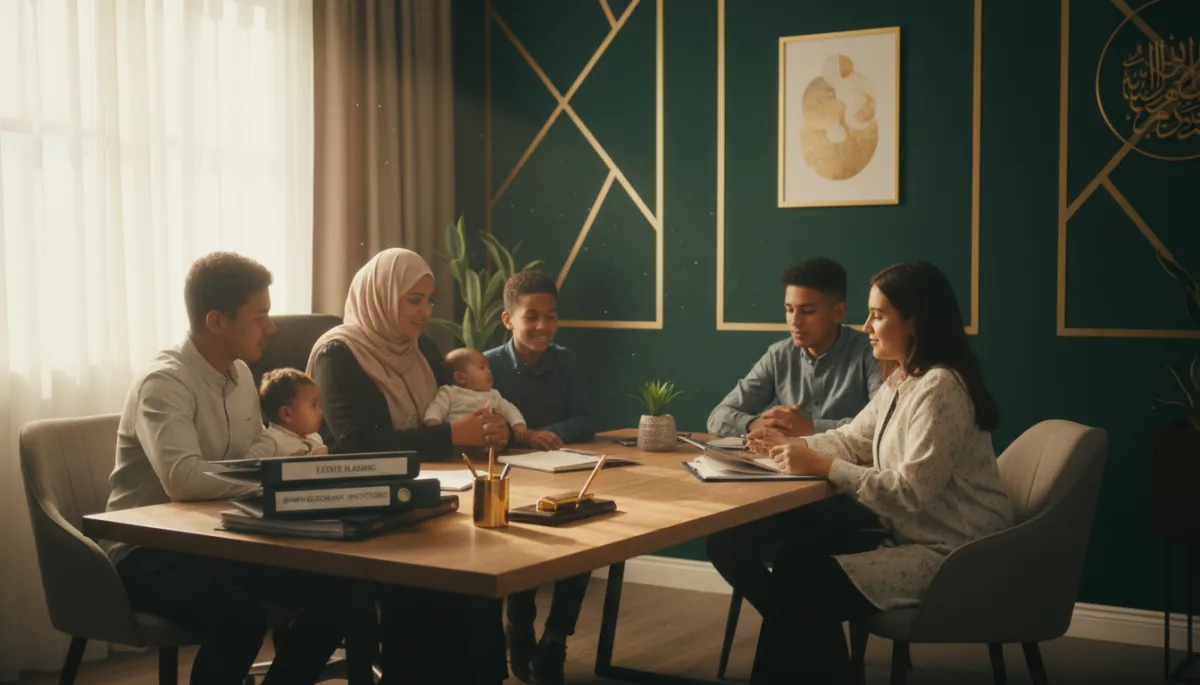
Blended families are more common than ever — and for South African Muslims, they create some of the most complex estate planning challenges imaginable. When you have children from a previous marriage, step-children, or adopted children alongside biological heirs, Islamic inheritance law can feel impossibly difficult to navigate on your own.
This guide breaks down exactly how Shariah treats each person in a blended family, what South African law adds to the picture, and — most importantly — what you can do right now to protect everyone you love.
Who Qualifies as an Heir Under Islamic Law?
Islamic inheritance law is precise. The Quran (4:11–12, 4:176) identifies specific categories of people who automatically inherit from a deceased Muslim. These are called ashab al-faraid — the fixed-share heirs. They include biological children (sons and daughters), spouses, parents, certain grandparents and grandchildren, and siblings in some circumstances.
Here is what makes blended families complicated: step-children do not inherit automatically under Shariah. Neither do adopted children in the Western legal sense. And children from a previous marriage only inherit from their biological parent — not from their step-parent. This does not mean they are left with nothing. It means you need to plan deliberately.
Step-Children and Islamic Inheritance
A step-child is a child your spouse brought into the marriage from a previous relationship. Under Shariah, they are not your heir — and you are not theirs. This surprises many Muslim parents in blended families. The step-child may have lived with you for twenty years. You may have raised them as your own. But unless you are their biological parent, they have no automatic claim to your estate under Islamic law.
The reason is not cruelty — it is precision. Islamic inheritance law is built on nasab (lineage) because this same lineage determines maintenance obligations, mahram status, and a range of other Islamic rights and duties.
Adopted Children: A Frequently Misunderstood Position
Islam has a specific institution called kafala — the guardianship and care of a child without formal adoption in the Western sense. Under Islamic law, a child retains the surname and inheritance rights of their biological family. They do not become legal heirs of their guardian’s estate.
This conflicts sharply with South African civil law, where a legally adopted child has the same inheritance rights as a biological child under the Intestate Succession Act. For South African Muslims, this creates a dual-system challenge: civil law may grant your adopted child a claim on your estate, while Shariah would not. If you want your adopted child provided for in a way that reflects your Islamic values, you need to plan explicitly — through a wasiyyah or a trust.
Children from a Previous Marriage
This is perhaps the most common blended family scenario in South Africa. You divorce, remarry, and now have children from both relationships. Children from your first marriage are your biological heirs — they inherit from you under Shariah. Your current spouse’s children from her previous marriage do not inherit from you. Your children from your first marriage do not inherit from her either.
What this means practically: all your biological children receive their faraid (fixed shares) from your estate. Step-children inherit nothing from your estate under Shariah, and would need to rely on their own biological parent’s estate or on deliberate planning you put in place.
Half-Siblings: A Case Often Overlooked
Half-siblings — children who share one biological parent but not both — do inherit in certain scenarios under Shariah, typically when there are no closer heirs in a specific category. The rules differ depending on whether they are full siblings, consanguine siblings (same father, different mothers), or uterine siblings (same mother, different fathers). In a blended family with multiple households, the half-sibling rules can become critical when both parents have died and there are no children or parents surviving.
Where South African Law Adds Complexity
South African courts have historically applied the Intestate Succession Act to Muslim estates when there is no valid civil will. This Act treats biological and legally adopted children equally — but it does not recognise Islamic fixed shares at all. The Muslim Marriages Bill has been under consideration for years but remains unenacted. Until it is tested in court, Muslim families remain in a legally uncertain space where Shariah and civil law can pull in opposite directions.
The practical implication: if you do not have a valid Islamic will (wasiyyah), your estate may be distributed in a way that satisfies neither Shariah nor your personal wishes. Use our free Islamic Inheritance Calculator to see exactly how Shariah would distribute your current estate among your specific heirs — a useful starting point for any blended family planning conversation.
The Wasiyyah: Your Most Powerful Planning Tool
A wasiyyah is an Islamic bequest — a deliberate allocation of up to one-third of your net estate to people who are not automatic heirs. For blended families, this is the primary mechanism to provide for step-children, adopted children, or anyone outside the faraid system.
- You could bequeath one-third of your estate to a step-daughter who has lived with you for fifteen years
- You could bequeath a portion to your adopted child, over and above what civil law already grants them
- You could bequeath a portion to a charitable cause in your name
The key constraint: the wasiyyah cannot benefit automatic heirs. And it is capped at one-third. If you want to give more than one-third to non-heirs, you would need agreement from all your heirs after your death — which is practically very difficult to achieve. This is why planning early matters so much. Read our guide on what a wasiyyah is and how it works for the full picture.
Trusts: Protecting Non-Heirs Long-Term
For larger estates or where you want structured, long-term provision for step-children or adopted children, a testamentary trust is a powerful tool. You establish the trust in your will, fund it from your estate, and appoint trustees to manage assets for their benefit. The trust can pay for education costs, provide a monthly income, or transfer assets when the beneficiary reaches a specified age — all conditions you set according to your values.
Crucially, the trust sits outside the Islamic inheritance distribution. Your Shariah heirs receive their faraid, and separately the trust provides for the non-heirs you want to protect. These two systems can work in parallel without conflict when properly structured. Our guide on trusts and Islamic inheritance explains the details.
Takaful in a Blended Family
Life insurance and takaful policies fall outside your estate in South Africa — they pay out directly to the nominated beneficiary, bypassing the inheritance distribution entirely. You can nominate step-children, adopted children, or any other person as the beneficiary of a takaful policy. They receive the payout regardless of what Islamic inheritance law would otherwise prescribe.
One important note: conventional life insurance with interest-based (riba) components raises Shariah compliance concerns. A Shariah-compliant takaful solution achieves the same protection outcome without the prohibited elements. Read our Takaful South Africa guide and our guide on life insurance and Islamic inheritance for more detail.
5 Steps Every Muslim Parent with a Blended Family Must Take
- Map your family structure — list every person who might have a claim or a need: biological children, step-children, adopted children, ex-spouses, current spouse
- Run an inheritance calculation — use the Islamic Inheritance Calculator to see exactly how your estate would be distributed under Shariah with your current family structure
- Identify the gaps — who would be left out? Who would receive less than you intend? These people need to be addressed through your wasiyyah and trust structures
- Draft a valid Islamic will — it needs to comply with both Shariah requirements and South African legal formalities. Read our guide on how to write an Islamic will in South Africa
- Review your takaful nominations — many people still have ex-spouses or outdated family members listed as nominees. Update these to reflect your current family situation
Why a Coordinated Approach Is Essential
Most people approach blended family estate planning piecemeal: a will from a lawyer who does not understand Shariah, takaful from an advisor who does not know the family structure, and the two never coordinated. The result is plans that conflict with each other and fail to achieve what the family actually wants.
At MuslimFin, we bring together Shariah scholars, legal professionals, and financial planners in a coordinated framework — so every piece fits together. Your wasiyyah, your trust structures, your takaful nominations, and your family’s specific circumstances all inform a single, coherent plan.
Read our complete guide: Islamic Inheritance in South Africa and Islamic Estate Planning South Africa.
Book Your Family Estate Planning Consultation
If your family does not fit the traditional mould, your estate plan needs to be built to match your actual reality — not a generic template. Book a confidential consultation with our team at MuslimFin. We will map your family structure, run your inheritance calculation, identify every gap, and help you build a plan that protects everyone you love — fully Shariah-compliant and legally sound under South African law.


